2027 Mid-Autumn Festival Date
The Mid-Autumn Festival is fixed on the 15th day of the 8th lunar month each year, which coincides with the time when the moon is fullest and brightest in the year, so it is also called the Moon Festival. It generally falls in September–October on the Gregorian calendar. The Mid-Autumn Festival 2027 falls on September 15 on the Gregorian calendar (the 15th day of the 8th lunar month).
What Is the Mid-Autumn Festival?
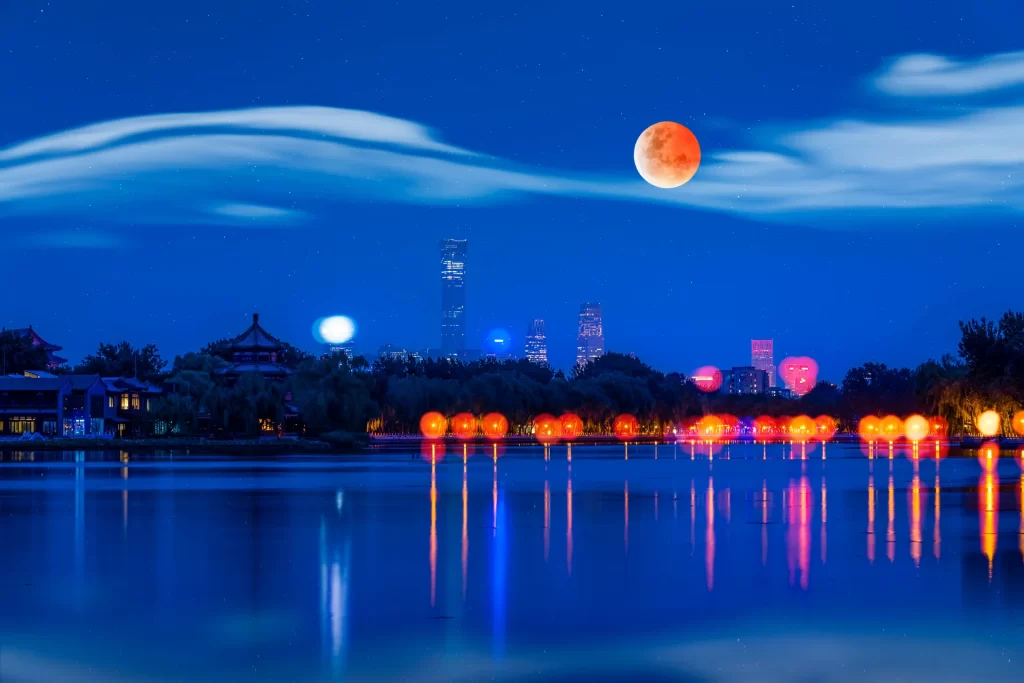
The Mid-Autumn Festival is an important traditional Chinese festival. Mid-Autumn, also called the Moon Reunion Festival, is one of China’s four major traditional festivals, alongside Spring Festival (Chinese New Year), Qingming Festival, and the Dragon Boat Festival. Its importance is second only to Spring Festival, and its status is similar to Thanksgiving in the West.
The Mid-Autumn Festival originates from ancient moon-worship and autumn harvest thanksgiving customs. Every year on the 15th day of the 8th lunar month, a bright moon hangs in the sky, carrying people’s longing for reunion. Here lies the romantic legend of Chang’e flying to the moon; moon viewing, tasting mooncakes, and visiting lantern fairs are all classic customs. It is also an Eastern festival deeply loved by many Asian countries.
Recommended reading:
Top10 Traditional Chinese Festivals: Dates, Origins, and Folk Customs
China’s 2027 Public Holiday Schedule for Major National Festivals Announced
Folk Legends of the Mid-Autumn Festival
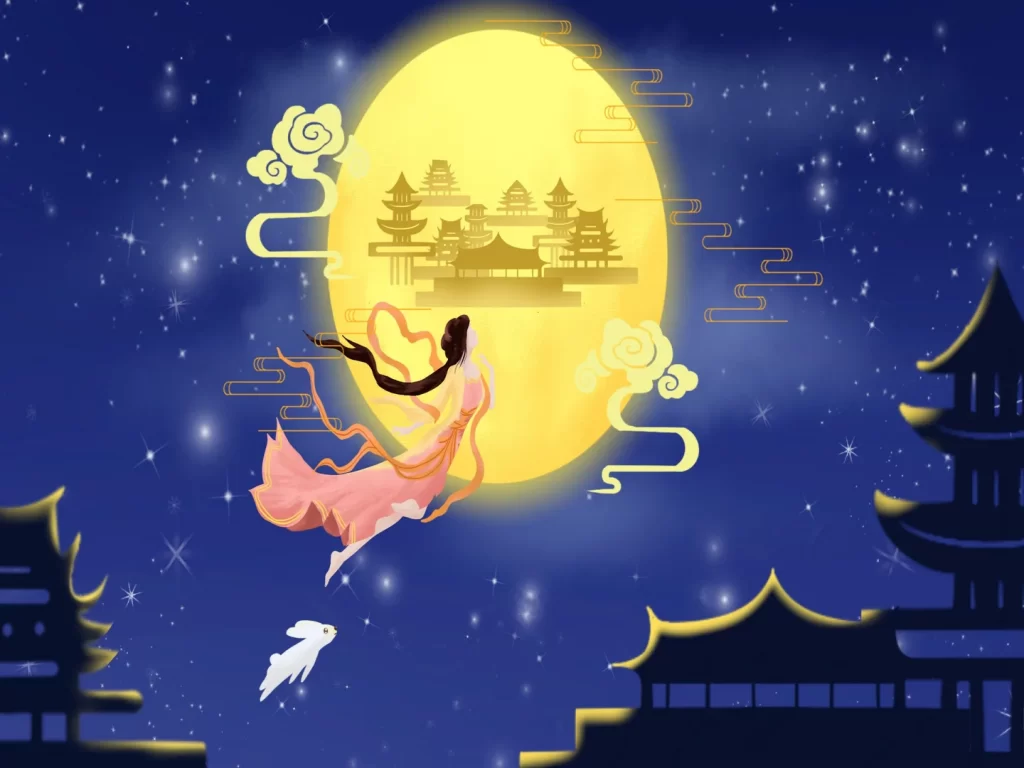
The most widely spread myth of the Mid-Autumn Festival is Chang’e flying to the moon. Legend says that in ancient times there were ten suns in the sky, and the people suffered terribly. Hou Yi shot down nine suns and saved the world, and the Queen Mother of the West rewarded him with an elixir of immortality. Hou Yi’s wife, Chang’e, to prevent an evil person from stealing the elixir, had no choice but to swallow it and flew to the moon palace, becoming a fairy. Hou Yi missed his wife and every year on the fifteenth day of the eighth lunar month held a banquet to worship the moon, hoping to reunite with his beloved. The people followed suit, and gradually the custom of worshipping the moon at Mid-Autumn formed.
The Mid-Autumn Festival also originates from ancient autumn harvest moon-worship rituals. The fifteenth day of the eighth lunar month coincides with the autumn harvest. Ancient people worshipped the moon god, gave thanks for nature’s gifts, and used newly harvested grain to make round cakes as sacrificial offerings—this was the earliest prototype of mooncakes.
Why Do People Celebrate the Mid-Autumn Festival?
Mid-Autumn originates from ancient moon-worship and autumn harvest thanksgiving rituals. As early as the Zhou Dynasty, there was a ritual system: “worship the sun at the Spring Equinox, worship the earth at the Summer Solstice, worship the moon at the Autumn Equinox, worship heaven at the Winter Solstice.” Autumn Equinox moon worship was the prototype of the Mid-Autumn Festival.
In the Tang Dynasty, Mid-Autumn became an official festival, and scholars and literati began to admire the moon and write poetry, enriching the festival’s cultural connotations.
By the Song Dynasty, Mid-Autumn had become a festival for all the people, and mooncakes specially sold for the occasion already appeared on the market.
In the Ming and Qing dynasties, the meaning of “family reunion” was continuously strengthened, and mooncakes symbolized the round moon and reunited people.
Through the changes of the times, the Mid-Autumn Festival has always centered on two major themes: harvest and reunion. August is when grains mature and are harvested; ancient people used this occasion to thank nature for its gifts and enjoy the fruits of their labor. The image of the full moon matches the Chinese people’s longing for family reunion. The tradition of looking at the moon and missing loved ones has continued to this day and has become an important cultural symbol of the Chinese nation.
How to Celebrate the Mid-Autumn Festival
Mid-Autumn celebrations revolve around the moon, reunion, and gratitude, blending poetic moon viewing, ancient folk customs, moving legends, specialty foods, and a warm family atmosphere.
1. Family Reunion Dinner
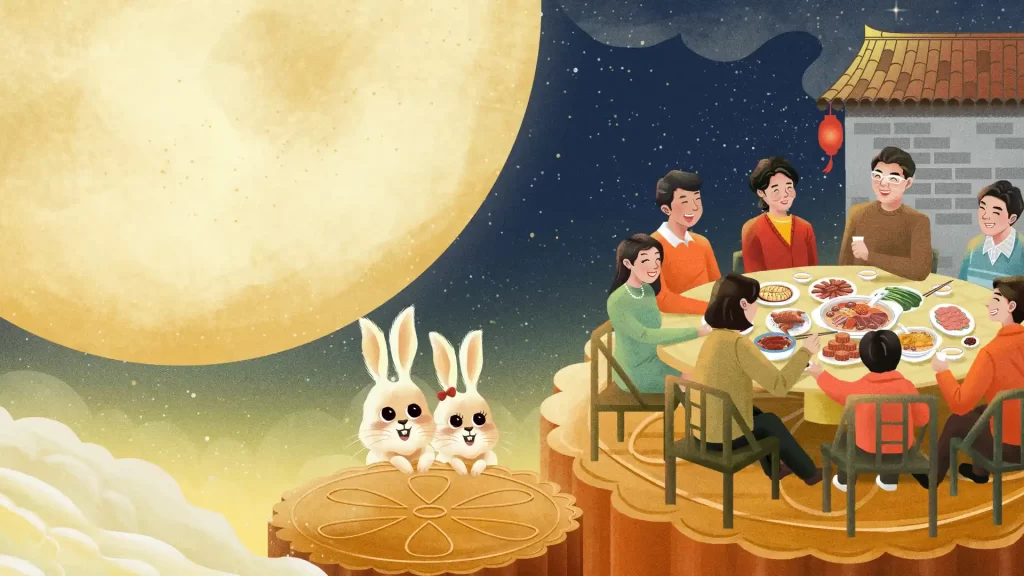
“Reunion” is the core of the Mid-Autumn Festival. No matter where they are, people try to return home to reunite with their loved ones. The Mid-Autumn family dinner is the most important activity of the evening, with abundant dishes and a table full of festive foods with auspicious meanings. Relatives and friends sit around sharing food and experiencing the heart of the festival.
2. Moon Viewing
After dinner, the whole family goes to the balcony, courtyard, or park to admire the full moon. People look at the moon, recite poetry, praise the beauty of the moonlight, and miss relatives who cannot return. The round moon carries people’s hopes for family happiness and a joyful life.
3. Moon Worship (Sacrificing to the Moon)
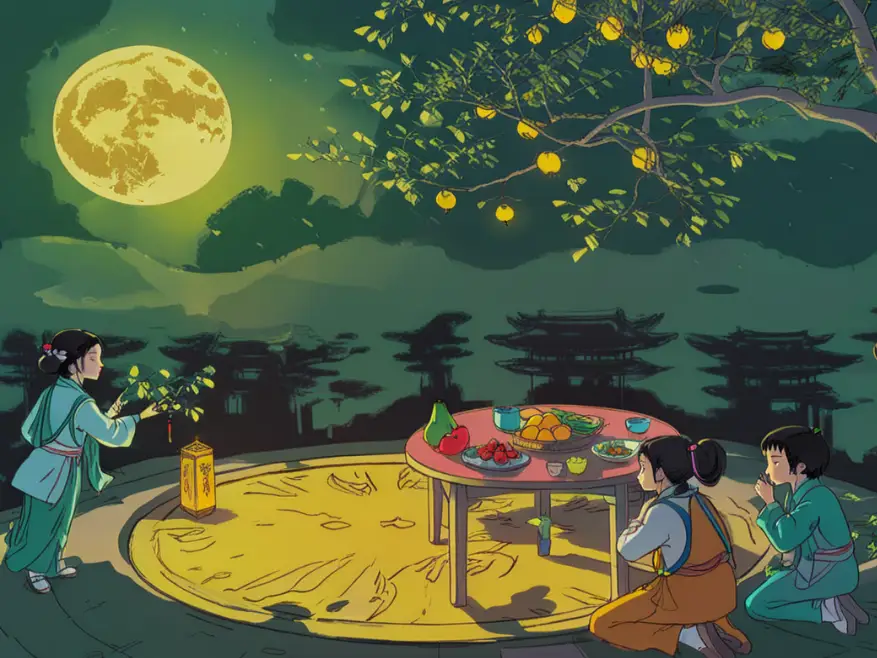
Moon worship is an ancient folk custom of sacrificing to the moon god. On the night of the fifteenth day of the eighth lunar month, an offering table is set up in the courtyard with melons, pomelos, mooncakes, and osmanthus wine. Usually the female elders of the family lead the whole family in bowing to the moon, worshipping the moon god, and praying for family peace and a bumper harvest.
4. Lanterns and Sky Lanterns
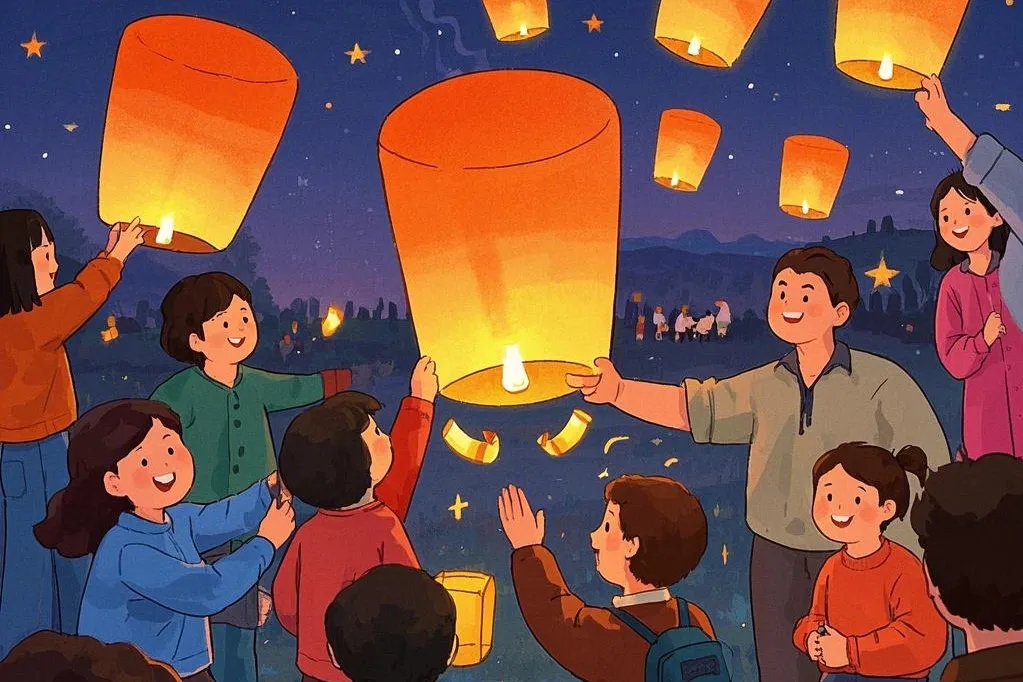
Children especially love this custom. At night, children carry lanterns in various shapes such as jade rabbits, goldfish, and flowers, originating from the legend of the jade rabbit in the moon palace, filling the streets with joy. In southern China, there is also the custom of releasing sky lanterns; people write down their wishes and release them into the night sky, symbolizing that their wishes will come true.
5. Fire Dragon Dance
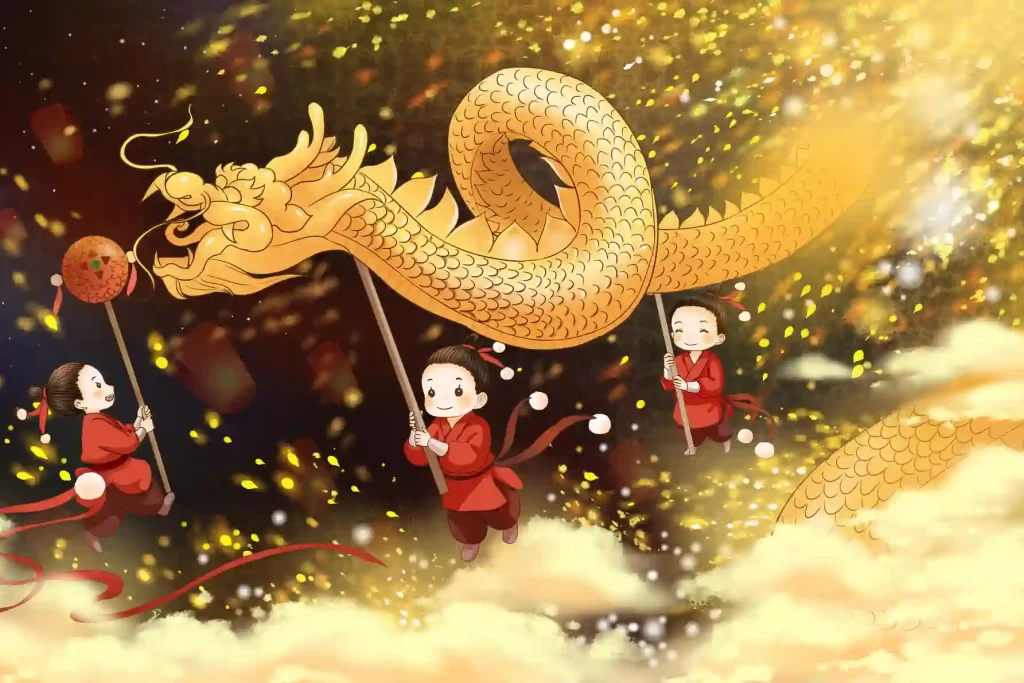
A highly distinctive Mid-Autumn folk custom in Hong Kong, Guangzhou, and other places. People make a dragon body from straw and insert burning incense sticks all over it. A fire dragon dozens of meters long is danced by strong men through the streets and alleys, with sparks flying and a spectacular scene. It symbolizes driving away evil and disaster and praying for peace and smooth success.
6. Enjoying Osmanthus Flowers and Drinking Osmanthus Wine
Mid-Autumn coincides with the blooming of osmanthus flowers, and legend says the moon palace also has lush osmanthus trees. Admiring osmanthus on earth feels like connecting with the moon palace. Osmanthus wine is fragrant and rich; on the night of the full moon, smelling the osmanthus fragrance and sipping osmanthus wine is a way to wish for a sweet and happy life.
7. Exchanging Gifts
Gift-giving is an important way to express feelings at Mid-Autumn. People visit relatives and friends to send blessings. Mooncake gift boxes are the most classic gift, symbolizing reunion and happiness. In addition, seasonal fruit baskets, osmanthus wine, hairy crabs, and tea are also very popular.
Traditional Foods of the Mid-Autumn Festival
Mid-Autumn foods are not only delicious but also carry rich cultural meanings. Each dish carries people’s longing for reunion and an abundant life.
1. Mooncakes — Completeness and Harmony
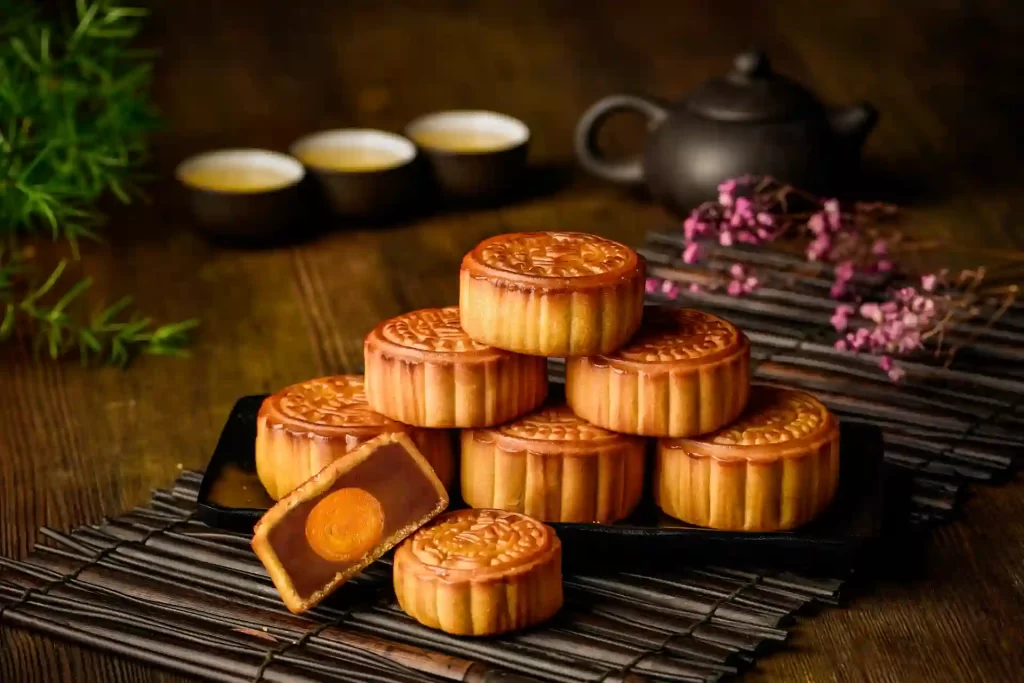
The crust is paired with rich fillings: red bean and lotus seed paste, salted egg yolk, and more, with rich layers of flavor. As the signature food of Mid-Autumn, the round shape symbolizes the full moon and family reunion, representing the Eastern concept of “harmony and beauty,” and wishing for family completeness and smooth success in all matters.
2. Pomelo — Protection and Prosperity
The flesh is sweet, sour, and juicy, full of autumn freshness. The Chinese word for pomelo sounds like “protecting children,” symbolizing lasting blessings and gratitude for nature’s gifts.
3. Taro — Warding Off Evil and Welcoming Blessings
The texture is starchy and soft, and it can be eaten savory or sweet. The name sounds like “surplus,” symbolizing abundance year after year. In some southern regions, people eat taro at Mid-Autumn to pray for driving away bad luck and hoping for a good harvest and happiness.
4. Osmanthus Wine — Expressing Feelings and Remembering Faraway Loved Ones
The fragrance is rich and the taste is sweet. Osmanthus symbolizes nobility and friendship. Raising a cup to the moon and drinking represents sharing the moonlight with distant relatives and friends, continuing the elegant tradition of the ancients looking at the moon and expressing their feelings.
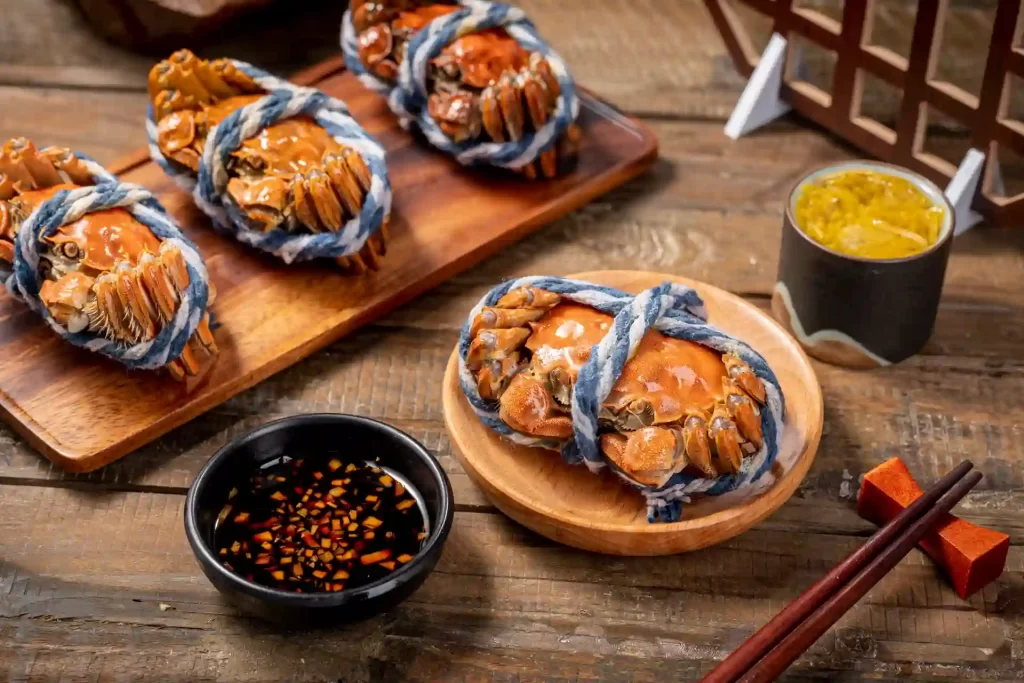
5. Crabs — Gratitude and Prosperity
The crab roe is full and the meat is fresh and sweet—a top autumn delicacy. Eating crabs symbolizes gratitude to nature and to the people around us, and praying for an abundant and prosperous life.
6. Pumpkin — Joy and Harvest
After steaming, it has a naturally sweet, golden color. A common Mid-Autumn food in the Jiangnan region, it symbolizes a house full of gold and jade, celebrating the harvest and family prosperity.
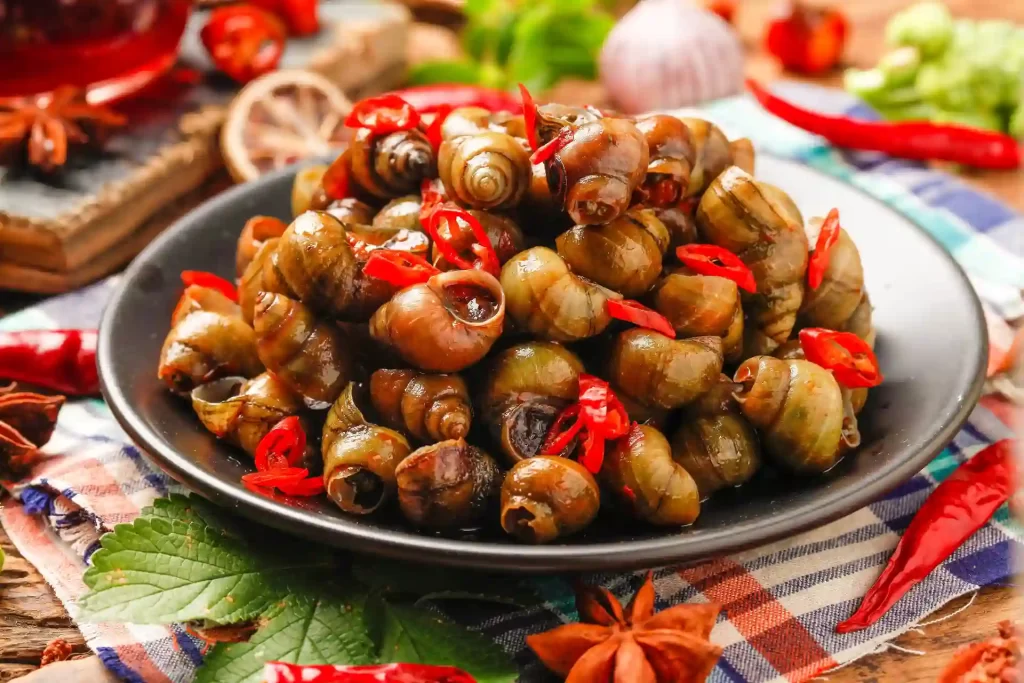
7. River Snails — Hopes for a Bright Future
Stir-fried river snails with perilla are savory and springy. Folk belief holds that eating river snails at Mid-Autumn can “brighten the eyes,” symbolizing a clear path ahead and all wishes coming true. It is very popular in Hunan, Guangdong, and Guangxi.
12 Classic Chinese New Year Foods and Their Auspicious Meanings
How Other Countries Celebrate the Mid-Autumn Festival
The Mid-Autumn Festival does not belong only to China. Vietnam, South Korea, Japan, Singapore, Malaysia, and other countries influenced by Chinese culture also celebrate it. Vietnam’s streets are brilliantly lit; Japanese gardens quietly view the moon; South Korea holds grand ancestor worship; Singapore holds citywide lantern fairs. Each country has developed its own festive characteristics.
Vietnam Mid-Autumn Festival: Lively lantern parades, children carrying lanterns to celebrate, with localized legends and foods.
Japan (Tsukimi): Japan calls moon viewing “Tsukimi.” Families set up offering tables with pampas grass, dumplings, and taro to worship the moon. Some temples hold moonlit tea ceremonies, writing poetry and tasting tea, expressing gratitude to nature.
South Korea (Chuseok): One of South Korea’s most important traditional festivals. Before the festival, large numbers of people return home for reunion. In the morning, a grand ancestor worship ceremony is held, with new rice, fruit, and special songpyeon rice cakes placed as offerings. The whole family dines together and catches up, cherishing family affection.
Singapore Mid-Autumn Festival: A blend of diverse cultures. Chinatown is decorated with giant Chang’e flying to the moon themed lanterns, integrating modern light art. Markets sell traditional Cantonese mooncakes and innovative durian snow-skin mooncakes. People of all ethnic groups participate in lantern fairs and cultural performances, making it a festival for everyone.
Malaysia Mid-Autumn Festival: Local Chinese communities preserve traditions while incorporating local features. In the evening, children carry lanterns into the streets, and communities hold markets and performances. The famous Musang King durian mooncakes are highly sought after, and people of diverse ethnicities share the joy of the festival.
Classic Mid-Autumn Poems
A bright Mid-Autumn moon has inspired poetic masterpieces passed down for thousands of years, expressing the countless emotions in people’s hearts:
- “但愿人长久,千里共婵娟!” (Dàn yuàn rén cháng jiǔ, qiān lǐ gòng chán juān!) — May all people live long and share the same beautiful moon, even a thousand miles apart.
- “海上生明月,天涯共此时。” (Hǎi shàng shēng míng yuè, tiān yá gòng cǐ shí.) — As the bright moon rises over the sea, people at the ends of the earth share this moment.
- “举头望明月,低头思故乡。” (Jǔ tóu wàng míng yuè, dī tóu sī gù xiāng.) — Raising my head, I look at the bright moon; lowering my head, I think of my hometown.
- “露从今夜白,月是故乡明。” (Lù cóng jīn yè bái, yuè shì gù xiāng míng.) — The dew turns white from tonight; the moon is brightest in my hometown.
- “今夜月明人尽望,不知秋思落谁家。” (Jīn yè yuè míng rén jìn wàng, bù zhī qiū sī luò shuí jiā.) — Tonight everyone gazes at the bright moon, yet no one knows whose home the autumn longing falls upon.
- “共看明月应垂泪,一夜乡心五处同。” (Gòng kàn míng yuè yīng chuí lèi, yī yè xiāng xīn wǔ chù tóng.) — Looking at the bright moon together, we should shed tears; on this one night, homesickness is the same in five places.
Fun Facts and FAQ
Q: What is the Mid-Autumn Festival?
A: One of China’s most important traditional festivals, celebrating the harvest and family reunion, and admiring the fullest, brightest moon of the year. It can be understood as a “Thanksgiving for reunion under the moonlight.”
Q: When is the Mid-Autumn Festival?
A: According to the lunar calendar, it falls on the fifteenth day of the eighth lunar month each year, when the moon is fullest. The Mid-Autumn Festival 2027 is September 15 on the Gregorian calendar.
Q: Are the “Moon Reunion Festival” and the Mid-Autumn Festival the same thing?
A: Yes. The Moon Reunion Festival is another name for the Mid-Autumn Festival; the moon is the core symbol of the festival.
Q: Why do people eat mooncakes at Mid-Autumn?
A: Round mooncakes symbolize reunion and completeness. In ancient times they were also used to worship the moon god and gradually evolved into an essential Mid-Autumn food.
Q: Is moon viewing a must-do custom?
A: Moon viewing is a core folk custom. If it is cloudy or rainy and the moon cannot be seen, a family dinner and reunion are still the most important form of celebration.
Q: Does the Mid-Autumn Festival ever overlap with National Day?
A: The lunar and Gregorian calendars are calculated differently, so Mid-Autumn occasionally overlaps with the National Day holiday, forming a “double festival” extended holiday.
Q: Is the Mid-Autumn Festival a statutory holiday? A: It is a statutory holiday in China, usually with 3 days off.
Q: How do Chinese people celebrate the Mid-Autumn Festival?
A: Family dinners, eating mooncakes, moon viewing, drinking osmanthus wine, playing with lanterns, and more.
Q: How can foreign tourists experience Mid-Autumn culture?
A: They can attend Mid-Autumn galas held by local Chinese communities, taste mooncakes, visit lantern fairs and admire the moon, or try making mooncakes by hand to immerse themselves in traditional culture.
1 Comment
[…] Dates, Origins, and Folk CustomsLantern Festival 2027: Date, Origins, Food, and Traditional CustomsMid-Autumn Festival 2027: Date, Legends, Food, and TraditionsChina’s 2027 Public Holiday Schedule for Major National Festivals […]