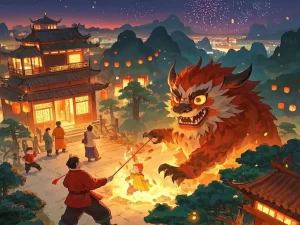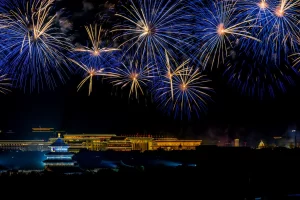
As the festive flavor of the New Year lingers and a full moon rises, the romantic and lively Lantern Festival arrives. As the grand finale of Spring Festival, this festival on the fifteenth day of the first lunar month is also called the Shangyuan Festival or the Festival of Lights. The whole city glows with colorful lanterns; people admire lanterns, solve riddles, and taste soft, sweet yuanxiao and tangyuan, praying for reunion amid laughter and joy.
It is not just a grand nighttime carnival; it also holds moving ancient legends and folk customs. If you are planning to travel to China at this time, lantern fairs, intangible cultural heritage performances, and hands-on craft experiences are all worth adding to your itinerary.
Recommended Reading:
Top10 Traditional Chinese Festivals: Dates, Origins, and Folk Customs
Chinese New Year 2027: Sumary, Traditions, Zodiac and Food
Qingming Festival 2027: Traditions, Taboos, Food, and Legends
Dragon Boat Festival 2027: Date, Origins, Food, and Folk Activities
Mid-Autumn Festival 2027: Date, Legends, Food, and Traditions
When Is the Lantern Festival in 2027?
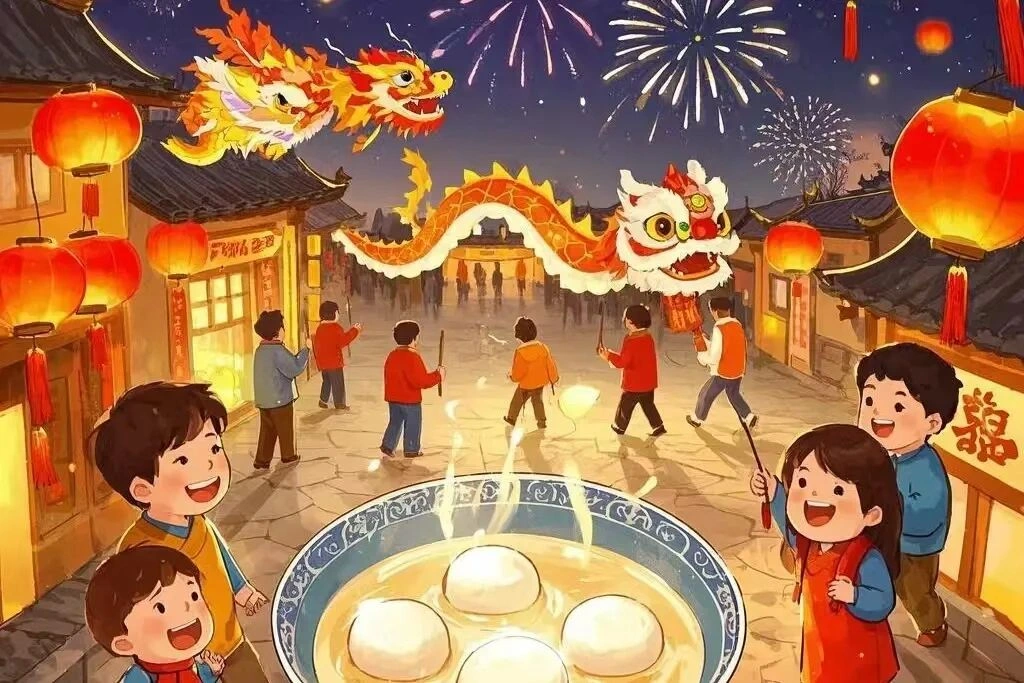
The Lantern Festival 2027 falls on February 20 (Saturday). The Lantern Festival is fixed on the fifteenth day of the first lunar month, usually in February or March on the Gregorian calendar. Chinese New Year 2027 is February 6 (the first day of the first lunar month), so the fifteenth day of the first lunar month is February 20.
What Is the Lantern Festival?
The Lantern Festival, also called the Shangyuan Festival, is the first important traditional festival after Spring Festival and marks the official end of the entire New Year celebration period. It falls on the fifteenth day of the first lunar month.
In ancient Chinese, “元” (yuan) refers to the first lunar month (the first month of the year), and “宵” (xiao) means night. The literal meaning of the Lantern Festival is the night of the first full moon of the new year. Ancient people believed that a full moon symbolizes family reunion, harmony, and happiness, so this festival carries the beautiful wish for family togetherness and prayers for peace and smooth success.
The Cultural Significance of the Lantern Festival in China
Spring Festival symbolizes the start of the new year; the Lantern Festival represents the conclusion of the New Year celebrations. After the Lantern Festival, all kinds of Spring Festival folk taboos are lifted, and households gradually take down their New Year decorations. Schools reopen, and people officially return to work.
1. Family Reunion and Harmony
The Lantern Festival welcomes the first full moon of the new year. The round moon symbolizes family reunion and a happy life. The whole family tastes yuanxiao together and admires the moon and lanterns, meaning “the moon is full and people are together.” It carries the Chinese people’s longing for family harmony and a complete, abundant life.
2. Bidding Farewell to the Old and Praying for Blessings
People light lanterns, burn incense to pray for blessings, visit temple fairs, and watch dragon and lion dances to send away the misfortunes of the old year and pray for national peace, good health, and prosperity in the new year.
3. Officially Starting the New Year’s Life
Only after the Lantern Festival is the New Year truly over. Farmers begin preparing for spring plowing, businesses resume normal operations, students return to school, and people devote themselves to the work and life of the new year with a fresh mindset.
Origins and Folk Legends of the Lantern Festival
Legend 1: Buddhist Origins
The custom originated in the Han Dynasty (2nd century BC), when Buddhist monks would light lamps on the fifteenth day of the first lunar month to honor the Buddha. Later, ordinary people followed suit, and the custom of lighting lamps spread across China and to other Asian countries.
Legend 2: The Jade Emperor’s Legend
Legend says that the Jade Emperor was furious because mortals had harmed his sacred goose and planned to send a great fire to destroy the cities of the human world. A fairy felt compassion and secretly told the people to light lanterns across the whole city on the designated day. When the Jade Emperor saw the city ablaze with firelight, he mistakenly thought the city had already been consumed by flames and withdrew his punishment. Since then, the tradition of hanging red lanterns during the Lantern Festival has been passed down.
Legend 3: Dongfang Shuo and the Lantern Girl (Most Widely Told)
During the reign of Emperor Wu of Han, a palace maid named Yuanxiao missed her family. The clever minister Dongfang Shuo devised a plan: spread a rumor that the heavenly palace would burn down Chang’an City; only by hanging lanterns across the city, setting off fireworks, and eating yuanxiao on the fifteenth day of the first lunar month could the disaster be averted. The emperor adopted the plan, and Yuanxiao took the opportunity to reunite with her family. The day was named after the girl and called the Lantern Festival.
Traditional Folk Customs of the Lantern Festival
Viewing decorative lanterns: The Lantern Festival is also called the Festival of Lights. Every household hangs colorful lanterns, and city parks and tourist attractions hold large lantern fairs. At night, the whole city is brilliantly lit, which is the most distinctive feature of the festival. Besides traditional palace lanterns and revolving lanterns, many modern lantern fairs now incorporate light shows.
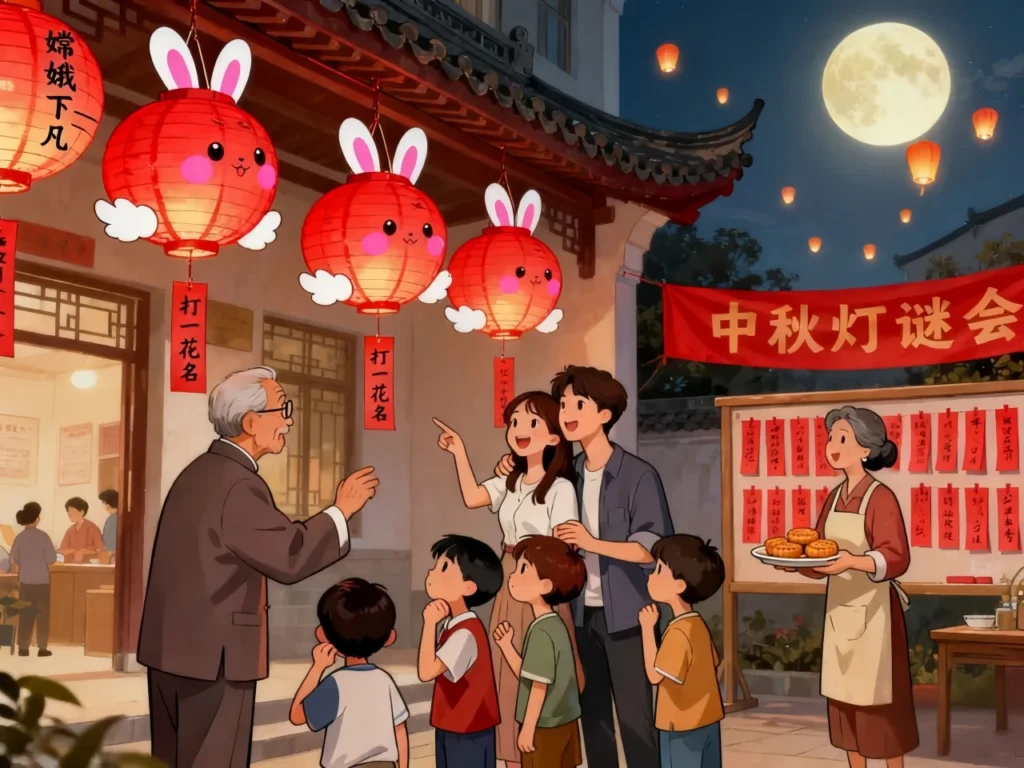
Solving lantern riddles: Riddles are written on slips of paper and pasted on colorful lanterns for passersby to solve. The riddles cover poetry, idioms, place names, and personal names. It is both a mental game and a highly interactive festive entertainment.
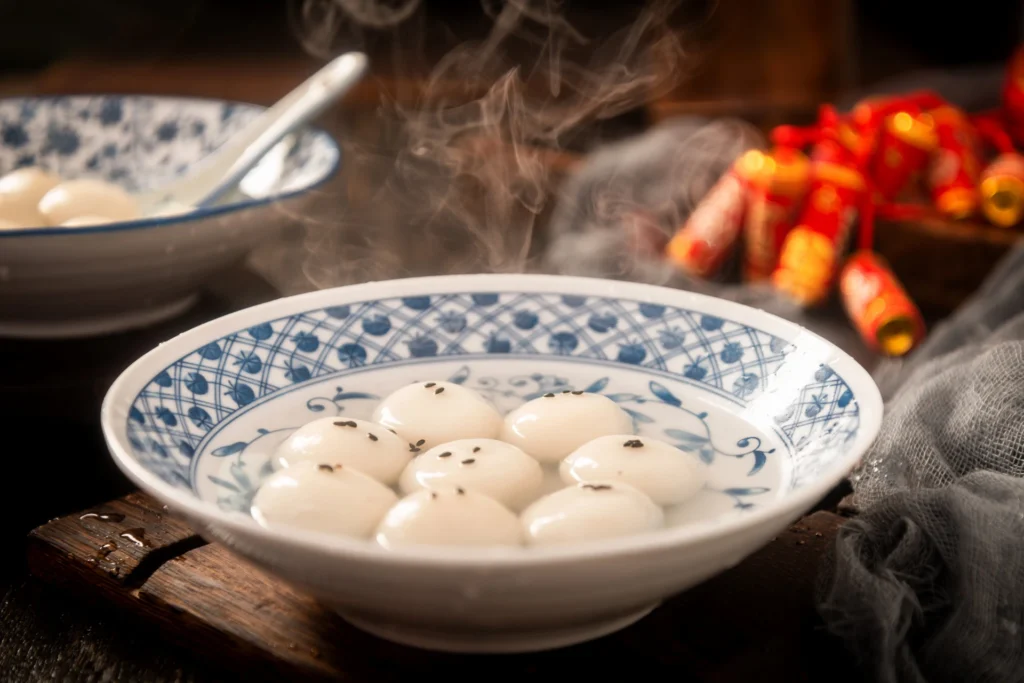
Eating yuanxiao: The most important tradition. Sweet glutinous rice balls in soup, “yuanxiao” sounds close to “tuanyuan” (reunion), making it both a delicious food and a symbol of family completeness.
Dragon and lion dances: With gongs and drums resounding, the dragon body coils and soars, and the lion leaps and prances, enhancing the lively festive atmosphere. Guangdong’s awakening lion dance and Zhejiang’s cloth dragon performances are especially spectacular.
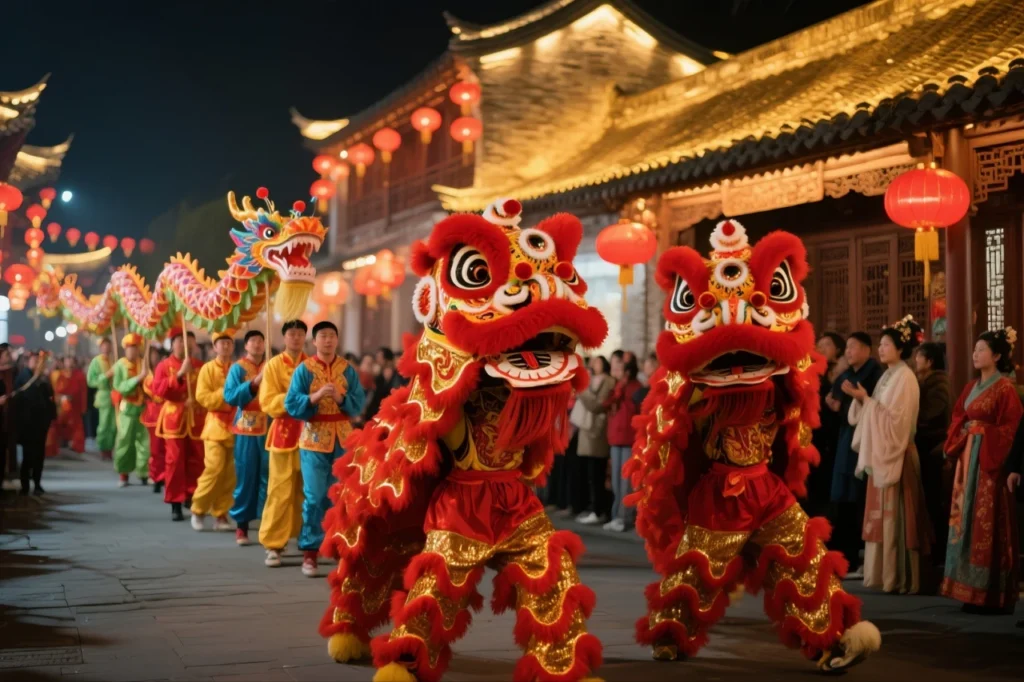
Walking away illnesses: In ancient times, women went out on Lantern Festival night and walked across three bridges. Folk belief held that this could dispel illness and disaster; today it has evolved into festive nighttime walking for fitness.
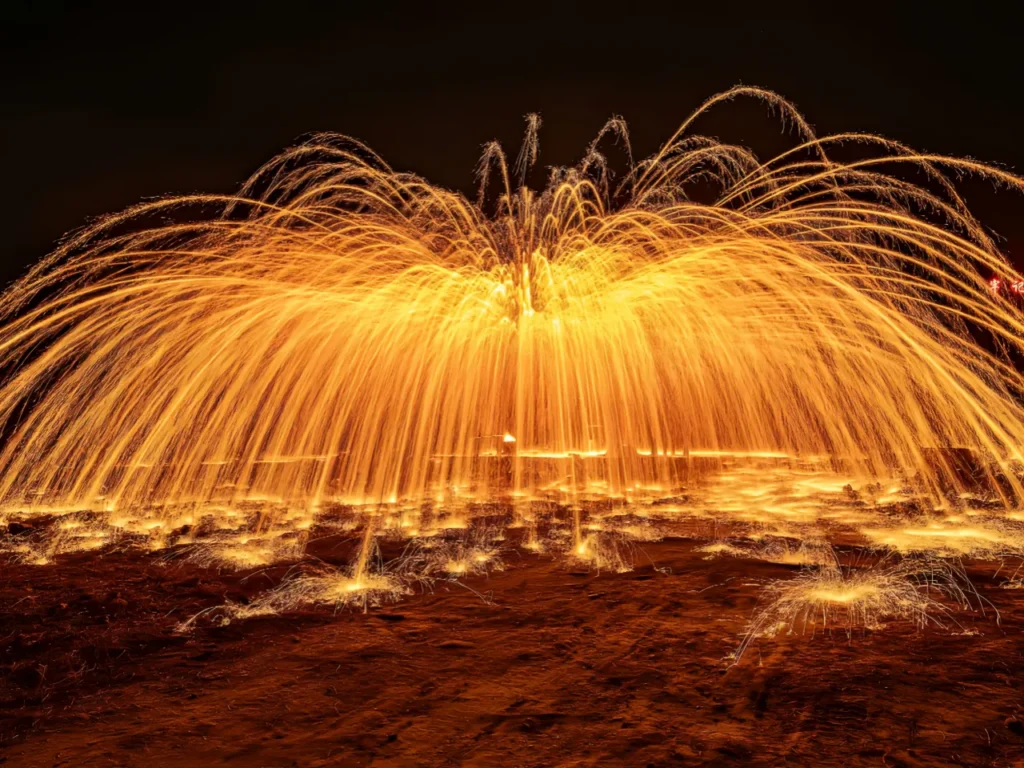
Local intangible cultural heritage performances: In some regions, you can watch molten iron fireworks (da tiehua), large bonfires, land boat dances, and river lantern floating. The scenes are spectacular and deeply loved by tourists.
Modern Lantern Festival Celebrations
Today, the Lantern Festival blends tradition and modernity, becoming a calling card for cities and a popular travel product for travel agencies:
- Large lantern fairs: Major cities across the country hold lantern fairs. Xi’an’s Grand Tang Mall, Nanjing’s Qinhuai River, the Chengdu Lantern Fair, and Shanghai’s Yuyuan Garden Lantern Fair are grand in scale and rich in atmosphere.
- Temple fairs and markets: Temple fairs sell specialty snacks and handicrafts, stage folk performances and interactive games, and let visitors truly experience the warmth of everyday life.
- Intangible cultural heritage performances: Molten iron fireworks, dragon and lion dances, opera, and hanfu parades make visitors feel as if they have traveled back to ancient China.
- Night tours and light shows: Many cities use modern technology to stage water-screen movies and drone light shows, creating dreamlike festive night scenes.
- Family and parent-child activities: The whole family makes lanterns by hand, rolls yuanxiao, and does DIY crafts, full of family warmth.
What Lantern Festival Folk Customs Can Foreign Tourists Experience?
The Lantern Festival is called a “lively festival” with rich interactive experiences. For foreign tourists, hands-on participation is far more fun than simple sightseeing.
- Handmaking palace lanterns: Many cities offer lantern-making workshops where you can learn about lantern history from craftsmen and make your own hexagonal palace lantern.
- Solving lantern riddles to win souvenirs: Join the riddle-solving, collect stamps, and exchange them for commemorative tickets or specialty gifts.
- Experiencing yuanxiao making: Folk culture centers and long-established restaurants offer experience classes where tourists can try the complete process of northern-style rolled yuanxiao and southern-style wrapped tangyuan.
- Visiting handicraft markets: Watch intangible cultural heritage artisans create on site and buy travel souvenirs.
- Hanfu photos at lantern fairs: Many lantern fair venues offer hanfu rentals, so you can stroll through the sea of lanterns in traditional clothing.
- Rubbing “Fu” characters and painting New Year pictures: Experience ancient woodblock rubbing, rub a “Fu” character by hand, and paint New Year pictures.
Specialty Foods of the Lantern Festival
Most Lantern Festival foods take a “round” shape, representing completeness and perfection, and are an indispensable part of the festival experience.
Yuanxiao: A northern specialty, made by repeatedly rolling fillings in dry glutinous rice flour, with a firm, springy texture. Classic fillings: black sesame, peanut, red bean paste; new flavors now include custard cream, matcha, and fruit.
Tangyuan: A southern specialty, made like dumplings, with glutinous rice dough wrapping the filling. The outer skin is soft and smooth, and the fillings are more varied: black sesame, peanut, red bean paste, walnut, and also savory fresh meat. Round yuanxiao/tangyuan symbolize a sweet life and family reunion.
Dumplings: In some parts of northern China, people eat dumplings during the Lantern Festival. Shaped like ancient gold ingots, with thin wrappers and generous fillings, common fillings include cabbage and pork, chive and egg, and three-delicacy shrimp. Steaming hot dumplings symbolize wealth and good luck.
Noodles: There is a custom of eating festival noodles at noon on the Lantern Festival, mostly handmade pulled noodles or dragon-whisker noodles in rich broth. The long, thin noodles symbolize a smooth life and long life and happiness.
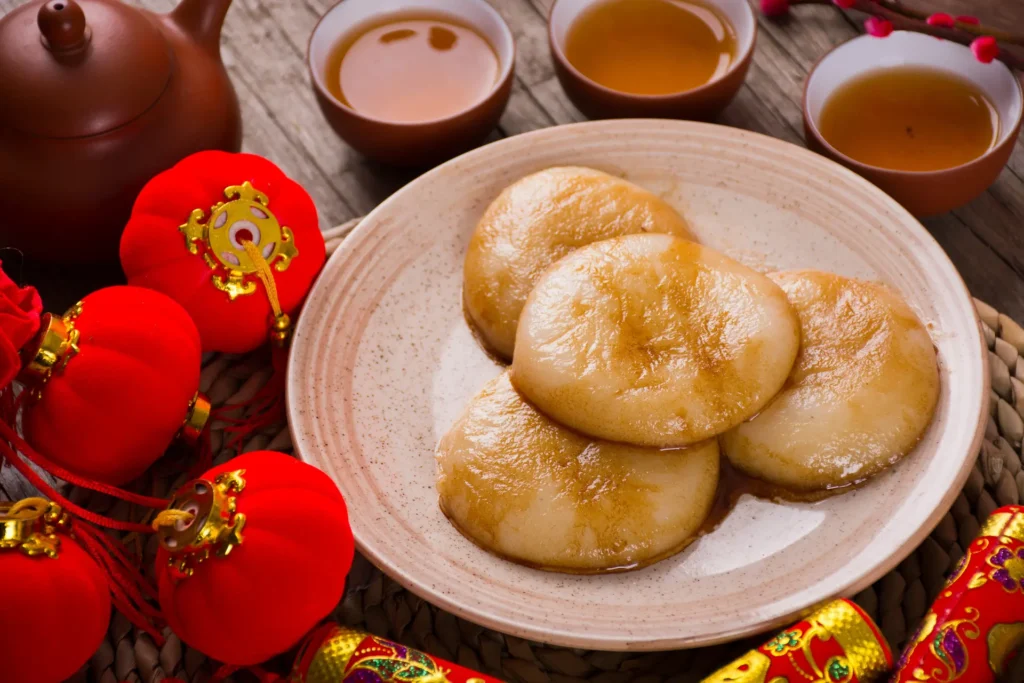
Ciba (glutinous rice cake): A traditional food in southwestern and southern China. Steamed glutinous rice is pounded repeatedly in a stone mortar, made into a soft cake, coated with soybean powder, and dipped in brown sugar. Crisp outside and soft inside, it symbolizes close family bonds and a sweet life.
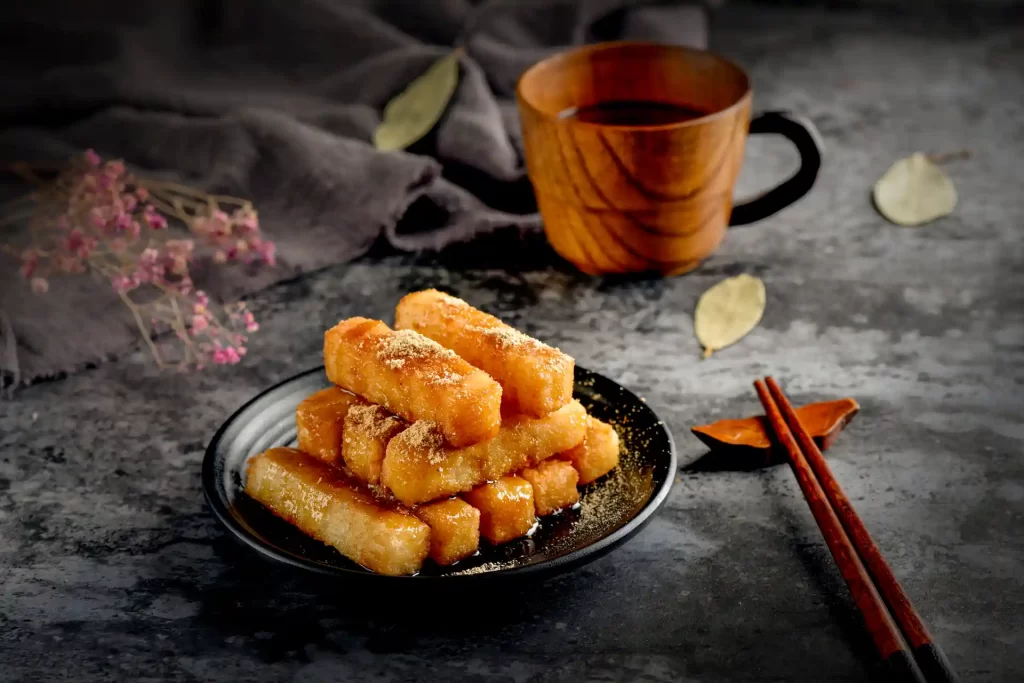
Fried cakes: A popular festive snack in the north. Sorghum or glutinous rice dough wraps red bean paste or brown sugar, is pressed into cakes, and deep-fried until golden. Sweet, fragrant, and crisp, they symbolize a rising career and ample food and clothing.
Lettuce: An essential auspicious dish on Cantonese tables. Lettuce is quickly stir-fried and drizzled with garlic and oyster sauce. “生菜” (lettuce) sounds the same as “生财” (making money) in Chinese, praying for wealth in the new year.
Chinese Greetings for the Lantern Festival
- 元宵快乐 (Yuánxiāo kuàilè) — Happy Lantern Festival!
- 阖家团圆 (Héjiā tuányuán) — Wishing your whole family reunion and happiness!
- 心想事成 (Xīn xiǎng shì chéng) — May all your wishes come true!
- 团团圆圆 (Tuántuán yuányuán) — Family harmony, completeness, and happiness.
- 甜甜蜜蜜 (Tiántián mìmì) — May life be as sweet as yuanxiao.
The Lantern Festival in Other Countries
The cultural influence of the Lantern Festival has long crossed China’s borders, and many countries have developed their own local ways of celebrating.
Singapore: Chinese communities preserve traditions and hold lantern fairs and cultural performances.
Malaysia: Penang and Kuala Lumpur hold temple fairs and markets; the Lantern Festival is also a local social gathering for meeting people.
South Korea: On the fifteenth day of the first lunar month, there is the “Great Full Moon” festival, with moon viewing and traditional folk rituals.
Vietnam: Some regions celebrate the Shangyuan Festival with lively lantern fairs.
United States: In Chinatowns in New York, Chicago, Los Angeles, and other cities, Chinese communities hold grand Lantern Festival lantern fairs every year.
FAQ
Q: When is the Lantern Festival in 2027?
A: The Lantern Festival 2027 is February 20, Saturday, the fifteenth day of the first lunar month, and the last day of Spring Festival celebrations.
Q: Is the Lantern Festival a statutory holiday in China?
A: Generally there is no day off, but the festive atmosphere is very strong.
Q: Is the Lantern Festival suitable for family trips?
A: Very suitable. The activities are highly interactive and offer rich cultural experiences.
Q: What is the weather like during the Lantern Festival?
A: It is early spring. Northern cities such as Beijing and Xi’an are still cold; southern cities such as Shanghai and Guangzhou have mild climates.
Q: Are shops and restaurants open during the Lantern Festival?
A: The vast majority of shops and restaurants are open as usual, and commercial areas in tourist cities are fully open.
Q: Do lantern fairs require tickets?
A: It depends on the venue. Large themed lantern fairs usually require tickets; street open-air performances are free to visit.
Q: Can I take photos and videos at lantern fairs?
A: Most lantern fair events allow photography and encourage sharing photos.
Q: What is the difference between yuanxiao and tangyuan?
A: Simply put: northern yuanxiao is made by rolling in dry flour; southern tangyuan is made like dumplings, with dough wrapping the filling. The production methods are different.