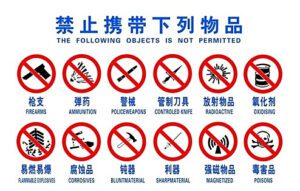
Introduction
Effective June 28, 2025, updated regulations governing the carriage of portable chargers (power banks) on domestic and international flights have taken effect in China. These new rules, introduced by the Civil Aviation Administration of China (CAAC), aim to enhance flight safety following a rise in incidents involving fires from substandard lithium-ion batteries. To ensure a smooth airport experience, travelers are strongly advised to familiarize themselves with these requirements in advance.
Key Prohibitions and Restrictions
1. Lack of mandatory CCC (China Compulsory Certification)
- The most significant update is the introduction of a mandatory requirement for China Compulsory Certification (CCC or 3C). This rule applies to all power banks, regardless of their country of manufacture.
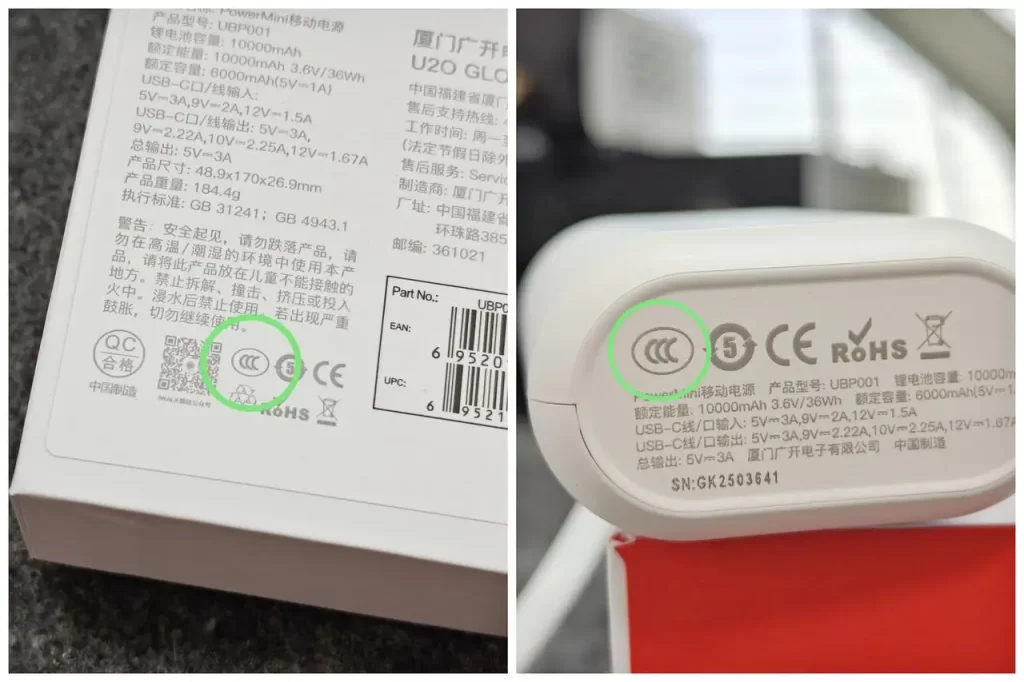
- Prohibited items: Power banks lacking 3C marking, as well as devices with unclear, damaged, or illegible markings.
- Important to know: Even if your device has safety certifications issued in other countries (such as UL, CE, or FCC) but lacks the 3C mark, it will be confiscated by airport security. This requirement is a key difference between the new rules and the previous ones.
2. Strict Capacity Limitations
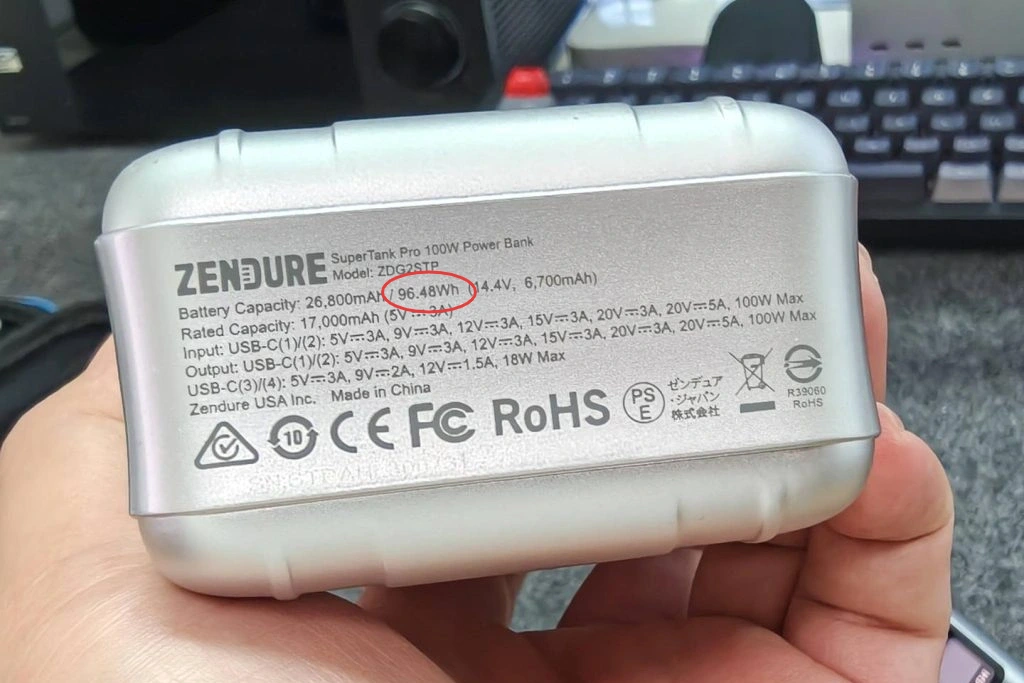
In addition to certification, there are restrictions on capacity, expressed in watt-hours (Wh). This information can typically be found on the device’s casing.
Under 100 Wh: Power banks in this capacity range are permitted for carriage without requiring any additional approval from the airline.
100 to 160 Wh: Devices in this capacity range can only be transported with the airline’s approval. A maximum of two such power banks per passenger is permitted.
Over 160 Wh: Power banks exceeding this capacity, as well as any devices lacking clearly marked watt-hour (Wh) ratings on their casing, are strictly prohibited from carriage.
3. Carry-On Luggage Only
A rule that has remained unchanged but still requires special attention:
Prohibition in Checked Baggage: Under no circumstances may power banks be placed in checked luggage. They must be transported exclusively in carry-on baggage. This is because, in the event of the device overheating or catching fire, the crew and passengers can respond promptly, which is impossible if the device is in the cargo hold.
Practical Tips for Travelers
To prevent your power bank from being confiscated and avoid delays at the airport, follow these steps:
- Check the Markings: Before your trip, carefully inspect your power bank. Ensure it has a clear 3C mark and displays the rated capacity in watt-hours (Wh).
- Assess the capacity: If your device’s capacity falls within the 100-160 Wh range, contact the airline in advance to obtain permission.
- Do not check it in: Always carry your power bank in your hand luggage. Remember that using or charging it on board the aircraft is prohibited.
Conclusion
China’s new power bank regulations are not merely a formality, but a crucial safety measure. By following these simple guidelines, you can ensure a worry-free journey and avoid unpleasant surprises at the airport. Remember that flight safety is a shared responsibility, and compliance with these rules is key to a successful and comfortable trip.
Frequently Asked Questions (FAQ)
Can I carry multiple power banks if their combined capacity does not exceed 160 Wh?
- According to CAAC regulations, you may carry up to two power banks with a combined capacity not exceeding 160 Wh, provided that each individual power bank has a capacity between 100-160 Wh and you have obtained approval from the airline. If each power bank is under 100 Wh, you may carry as many as needed for personal use.
What should I do if my power bank does not have the watt-hour (Wh) rating listed?
- If the device’s casing does not display the power in Wh, it will be confiscated. You can calculate it yourself using the formula: Wh = voltage (V) × capacity (mAh) / 1000. For example, if a power bank is labeled 5V/10,000mAh, its capacity would be: 5 × 10,000 / 1000 = 50 Wh. If this information is missing entirely, it is better not to take the risk.
What is 3C Certification and What Does It Look Like?
- 3C Certification (China Compulsory Certification) is China’s mandatory safety certification system, serving as a national equivalent to international safety standards. Its mark appears as a logo composed of three “C” letters arranged in a circular pattern. This certification confirms the product’s compliance with Chinese national safety standards. (Refer to the images above for visual reference.)
How to Charge Your Devices Onboard an Aircraft?
- Virtually all airlines are now equipped with charging stations, especially on long-haul flights. Passenger aircraft are typically fitted with USB ports or AC power outlets located on the seatbacks or within the armrests, allowing passengers to charge their electronic devices directly.
Therefore, it is recommended to pack your charging cables in your carry-on luggage before boarding to ensure your electronic devices do not run out of battery during the flight.
What Happens If I Accidentally Check My Power Bank in My Luggage?
- Airport security will detect it during baggage screening. Your suitcase will not be loaded onto the aircraft, and you will be required to return to the security checkpoint to remove the prohibited item. As a result, you may miss your flight.
Do the rules apply only to flights from China or to all flights?
- These regulations were introduced by the Civil Aviation Administration of China (CAAC) and are mandatory for all flights departing from China. However, many airlines worldwide have similar restrictions, so it is always best to carry power banks in your carry-on luggage.