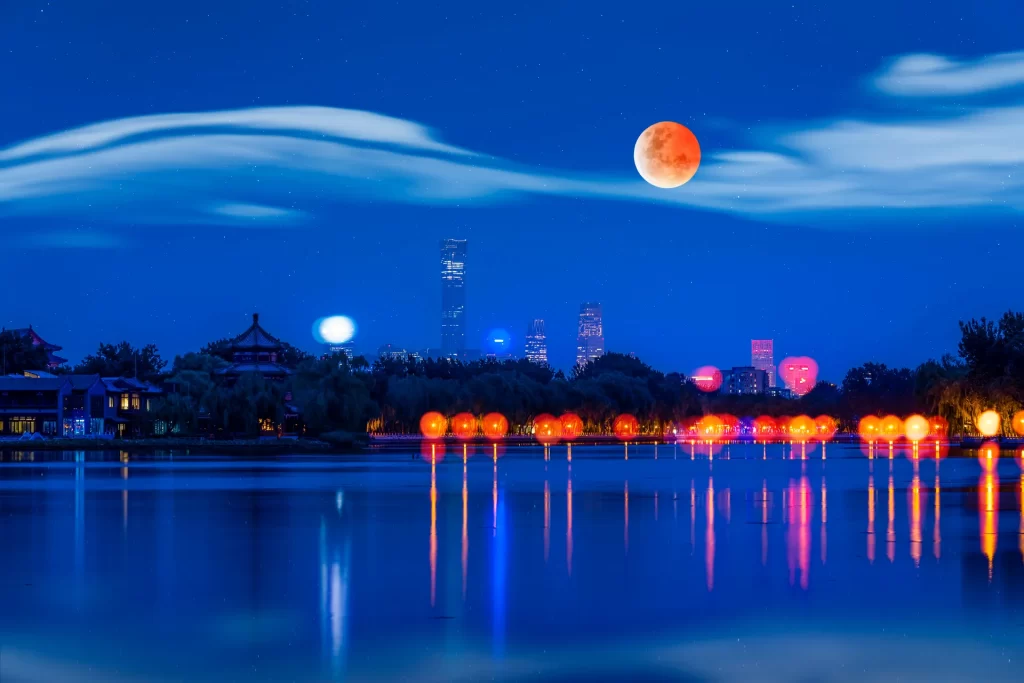
Introduction: The Mid-Autumn Festival, also known as the Moon Festival, Mooncake Festival, or simply the Autumn Festival, is one of China’s four major traditional festivals alongside Chinese New Year, Qingming Festival, and Dragon Boat Festival. It’s one of the most important traditional holidays in China and many Asian countries, similar in spirit to Thanksgiving, and perhaps only second in significance to Chinese New Year. On the 15th day of the 8th lunar month every year, people admire the moon, eat mooncakes, carry lanterns, express longing for their hometown and loved ones, and pray for a happy life and a prosperous nation. This article will take you deep into the origins, customs, food, and cultural significance of the Mid-Autumn Festival, allowing you to experience the romance and philosophy of the Eastern moonlit night.
The Stories of the Mid-Autumn Festival
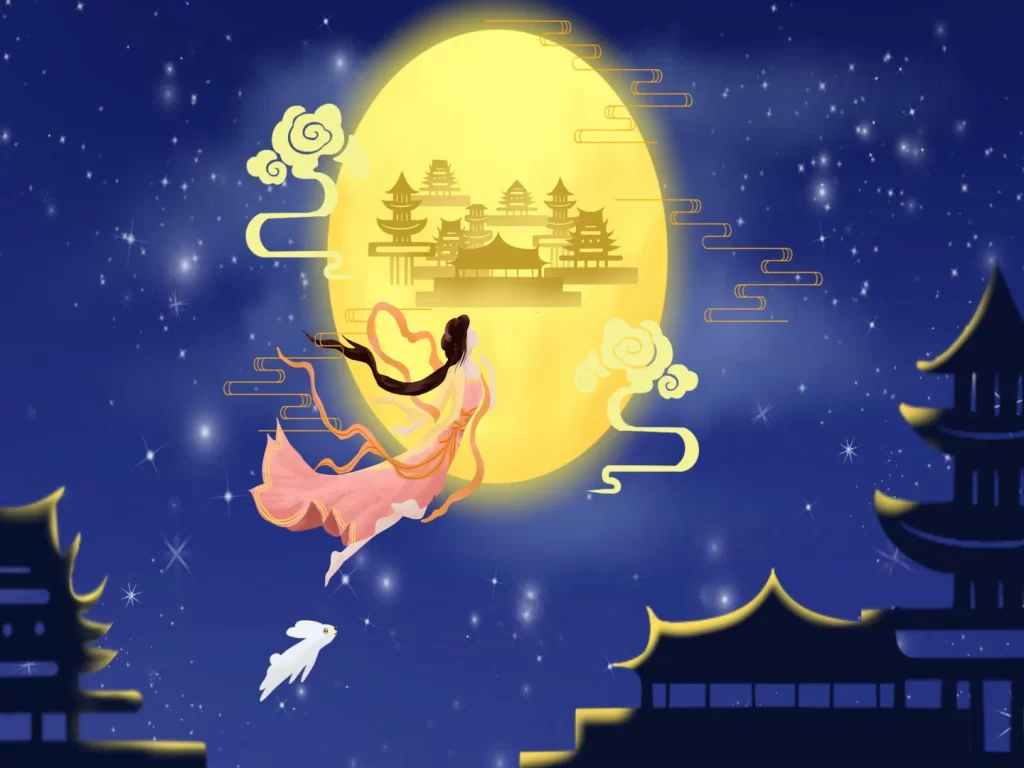
The stories of the Mid-Autumn Festival originate from a series of ancient and romantic myths and historical evolution, the most famous being the legend of Chang’e Flying to the Moon. Legend says that in ancient times, ten suns appeared simultaneously, making life unbearable. The hero Hou Yi shot down nine suns, saving humanity, and was rewarded by the Queen Mother of the West with an elixir of immortality. His wife, Chang’e, to prevent a villain from stealing it, reluctantly swallowed the elixir herself and flew to the Moon Palace, becoming the Moon Goddess. Hou Yi missed his wife dearly and would hold a feast and make offerings to the moon every year on the 15th of the 8th month, praying for reunion. Thereafter, common people followed suit, gradually forming a custom.
Simultaneously, the Mid-Autumn Festival is rooted in ancient autumn harvest moon worship activities. As crops ripened and were harvested, ancestors would hold ceremonies on this day to thank the Moon God and nature for their bounty. They used newly harvested grains to make round cakes as offerings, which is the earliest origin of the “mooncake”, symbolizing both the completeness of the harvest and family reunion.
Why Celebrate the Mid-Autumn Festival?
The Mid-Autumn Festival originated from the ancient Chinese people’s natural worship of the moon and thanksgiving rituals after the autumn harvest. As early as the Zhou Dynasty (1046 BC), emperors had rituals: “worship the sun at the spring equinox, worship the earth at the summer solstice, worship the moon at the autumn equinox, worship the heavens at the winter solstice.” The autumn equinox moon worship gradually evolved into the prototype of the later Mid-Autumn Festival. During the Tang Dynasty (618 AD), the Mid-Autumn Festival became an established holiday, and the trend among scholars of admiring the moon and composing poetry further enriched the festival’s cultural meaning. By the Song Dynasty (960 AD), it had become a nationwide festival, and markets began selling “mooncakes” specifically for the occasion. After the Ming and Qing Dynasties (1368 AD), the meaning of reunion became more prominent, and mooncakes were endowed with the symbolism of “using the round cake to metaphorize human reunion.”
Regardless of historical changes, the Mid-Autumn Festival has always clung tightly to the themes of “harvest” and “reunion.” The 15th day of the 8th lunar month coincides with the ripening of crops; ancient farmers used this time to thank nature for its gifts and celebrated the Mid-Autumn Festival as a moment to rest and enjoy the fruits of their labor. The image of the full, round moon also perfectly dovetailed with the Chinese emphasis on family reunions. These ancient traditions continue today, becoming an important cultural identifier for the Chinese nation.
Date of the Mid-Autumn Festival in China
The Mid-Autumn Festival in 2025 falls on October 6th in the Gregorian calendar.
The Mid-Autumn Festival is fixed annually on the 15th day of the 8th lunar month (when people believe the moon is at its roundest and most beautiful). The Gregorian date changes each year, generally occurring between mid-September and early October. Although the festival itself is one day, the celebratory atmosphere often starts a few days prior and lasts until the evening or even the next day. Some regions (like Southern China, Hong Kong, Macau, Taiwan) also hold lantern fairs, fire dragon dances, and other activities to extend the festive joy. In China, the Mid-Autumn Festival is a 1-day national statutory holiday. Combined with the adjacent weekend, it usually makes a 3-day holiday. However, 2025 is special as the Mid-Autumn Festival overlaps with the National Day holiday (Golden Week). Therefore, celebrating both festivals together, there will be an 8-day holiday.
Mid-Autumn Festival Celebrations & Activities
The celebrations of the Mid-Autumn Festival revolve around the “moon,” “reunion,” and “thanksgiving.” They include both the poetic and romantic act of moon gazing and folk rituals rich in cultural symbolism, forming a celebration that blends ancient legends, delicious feasts, and warm family reunions.
1. Family Reunion Dinner
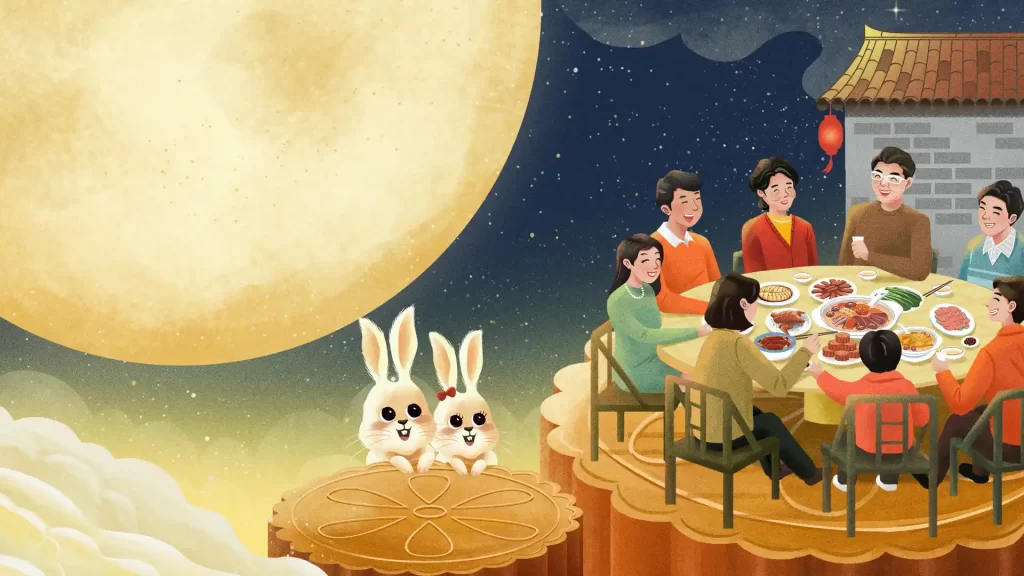
The core of the Mid-Autumn Festival is “reunion”. No matter where they are, people strive to return home to be with their families on this day. This reunion dinner is the highlight of the evening, far more sumptuous than a regular meal. Alongside home-style dishes, the table must includes several symbolic Mid-Autumn delicacies. Family and friends gathering around the table, enjoying these traditional foods full of blessings, chatting about life – this harmonious atmosphere is the warmest essence of the festival.
2. Admiring the Moon
On the Mid-Autumn night, alongside enjoying food, the most important collective activity is admiring the moon. Households gather on balconies, in courtyards, or parks to gaze at the bright moon, recite poetry, express admiration for the beauty of nature, and long for relatives who couldn’t return home. This full moon also embodies people’s deep hopes for family reunion and a happy life.
3. Moon Worship
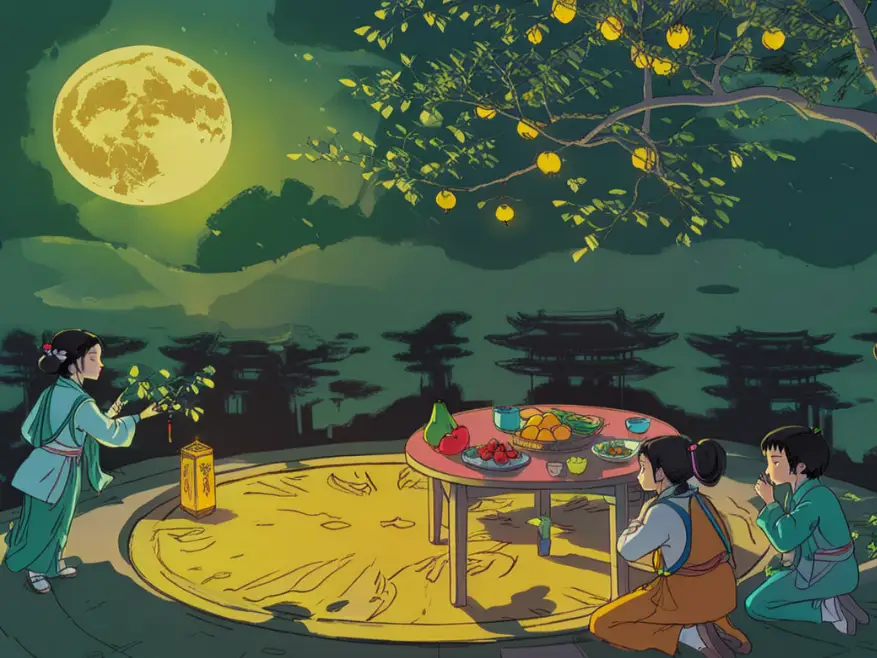
Moon worship is a long-standing traditional ritual of the Mid-Autumn Festival, an act of reverence towards the “Moon Goddess” by the ancients. On the evening of the 15th, a tablet for the Moon Goddess is set up at home or outdoors, offerings like melons, fruits, pomelo, mooncakes, and osmanthus wine are placed, and often the female elder of the family leads the family in bowing towards the moon, expressing respect to the Moon Goddess and praying for family reunion, peace, and a bountiful harvest.
4. Carrying Lanterns and Releasing Sky Lanterns
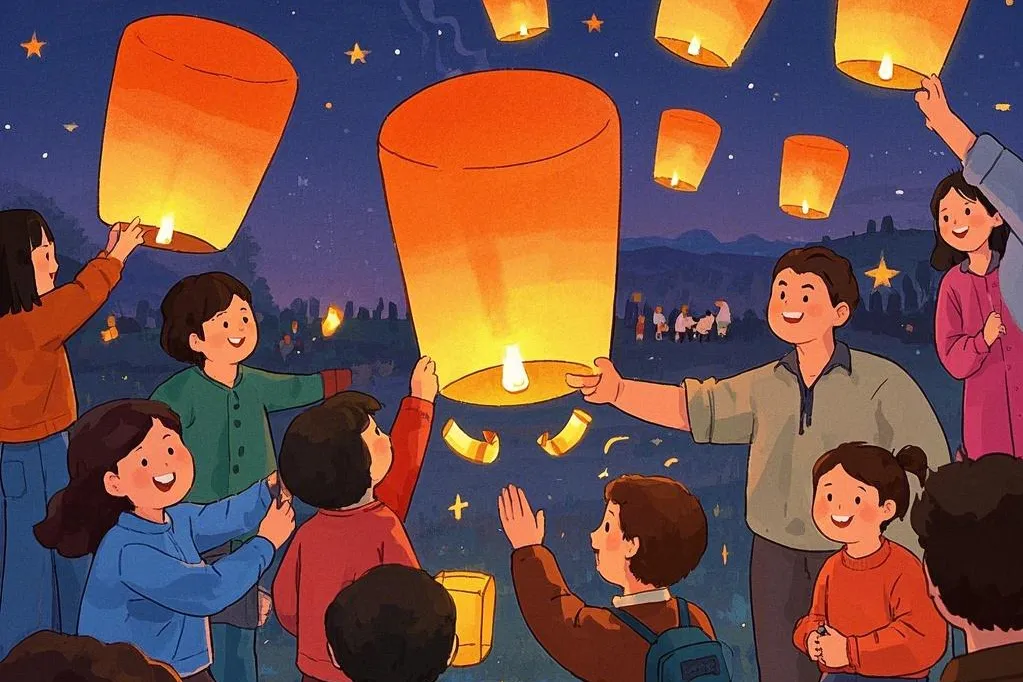
This activity is especially beloved by children. On the Mid-Autumn night, children carry various cute-shaped lanterns – common shapes include rabbits, goldfish, flowers, trees, stars, and especially the Jade Rabbit lantern, closely related to the legend of the rabbit on the moon – full of childlike fun and festive atmosphere. Southern regions also have the custom of releasing sky lanterns (Kongming lanterns); wishes are written on the lanterns before they are released into the night sky, symbolizing hope and light, and praying for one’s wishes to come true soon.
5. Fire Dragon Dance
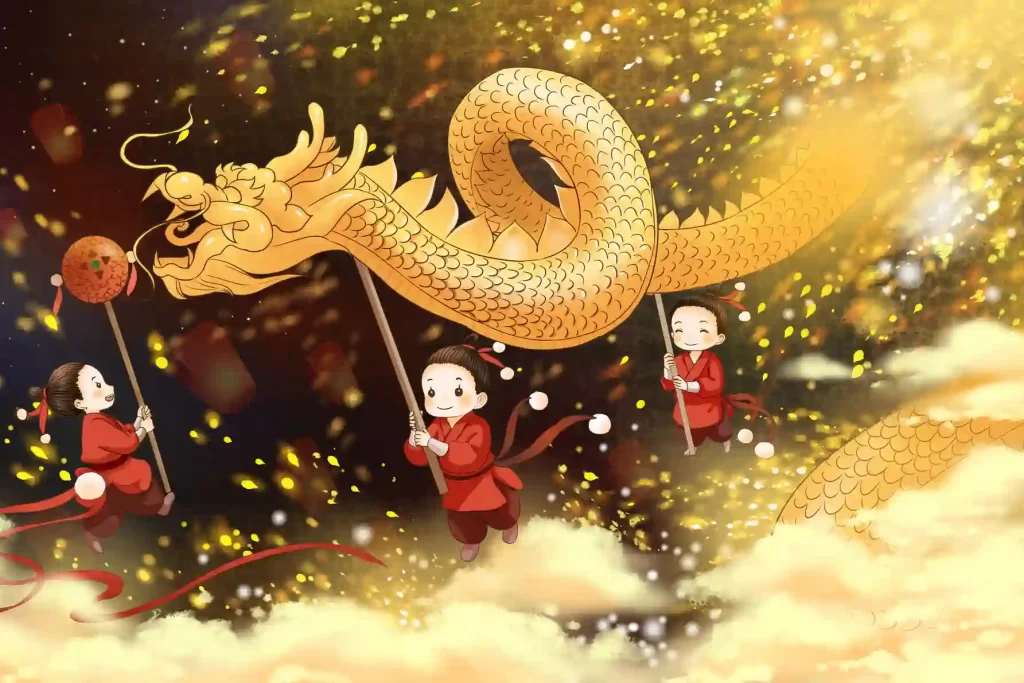
The Fire Dragon Dance is the most traditional custom in places like Hong Kong and Guangzhou during the Mid-Autumn Festival. People create a dragon body from straw, insert numerous lit incense sticks into it, and strong villagers wield this dragon, tens of meters long, as it weaves and spirals through the streets, sparks flying everywhere, creating a extremely spectacular scene meant to ward off evil spirits and pray for safety.
6. Enjoying Osmanthus Flowers & Drinking Osmanthus Wine
The Mid-Autumn Festival coincides with the golden autumn season when osmanthus flowers bloom. People believe the osmanthus tree in the Moon Palace also flourishes on this night, so admiring osmanthus flowers becomes a wonderful connection between the human world and the moon. Osmanthus wine, brewed from these flowers, is a delicacy on the Mid-Autumn feast. Gazing at the moon, smelling the waves of osmanthus fragrance, and drinking a cup of sweet osmanthus wine to celebrate family sweetness has become a beautiful enjoyment of the festival.
7. Exchanging Gifts
Giving gifts is an important way to express affection during the Mid-Autumn Festival. During the holiday, people carefully prepare gifts to visit relatives and friends, showing care and blessing. Traditionally, mooncakes are the most classic and popular gift; exquisite mooncake gift boxes carry the wish for “reunion and happiness.” Additionally, seasonal fruit baskets, osmanthus wine, hairy crabs, and tea are also common choices. This custom strengthens emotional bonds between family and friends and fills the festival with warm human connection.
Mid-Autumn Festival Foods and Their Meanings
The foods of the Mid-Autumn Festival are not only delicious but also rich in deep cultural symbolism. Each dish carries people’s yearning for reunion, auspiciousness, and a better life. Here are introductions to several classic Mid-Autumn foods.
1. Mooncake – Completeness & Harmony
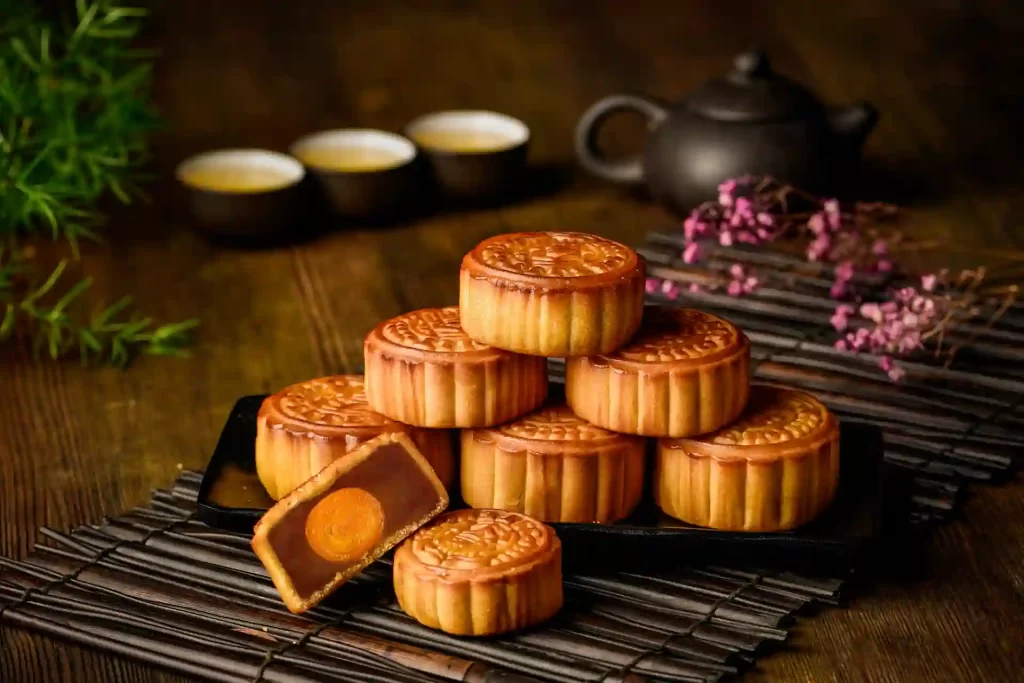
Mooncakes have a soft, flaky, or dense outer skin with a rich and varied filling, from sweet red bean paste or lotus seed paste to savory egg yolk, offering layers of flavor. They are the core ceremonial food of the festival. Their round shape symbolizes the full moon in the sky and reunion on earth, embodying the Eastern values of “harmony” and “sharing,” expressing wishes for family reunion and a happy life.
2. Pomelo – Protection & Prosperity
Refreshingly sweet and slightly sour, with plentiful juice, eating pomelo brings a sense of autumn freshness and sweetness. The name “柚子” (yòuzi) sounds like “佑子” (yòu zǐ), meaning “blessing/protecting children,” carrying the meaning of blessing descendants with safety and good fortune. It represents the Chinese use of natural products to express good wishes for family continuity.
3. Taro – Warding Off Evil & Good Luck
Taro has a powdery, soft, sweet texture and can be prepared savory or sweet. Stewed with meat, it fully absorbs the essence of the broth, becoming savory, fragrant, and tender. Because its pronunciation “yùtou” is similar to “余头” (yútóu – surplus), it implies “surplus every year” (年年有余, niánnián yǒuyú) and abundant happiness. Eating taro in some southern regions symbolizes warding off evil and dispelling disaster. It combines the dual expectations of harvest and auspiciousness in agrarian culture.
4. Osmanthus Wine – Elegance & Longing
The wine has an elegant aroma, the osmanthus flowers offer a rich fragrance, and the taste is mellow and slightly sweet. Osmanthus symbolizes nobility, friendship, and longing. Drinking osmanthus wine signifies “sharing the same moon” with distant relatives, expressing emotional connection. It continues the ancient elegant tradition of “drinking lightly under the moon, expressing feelings through wine.”
5. Crab – Great Fortune
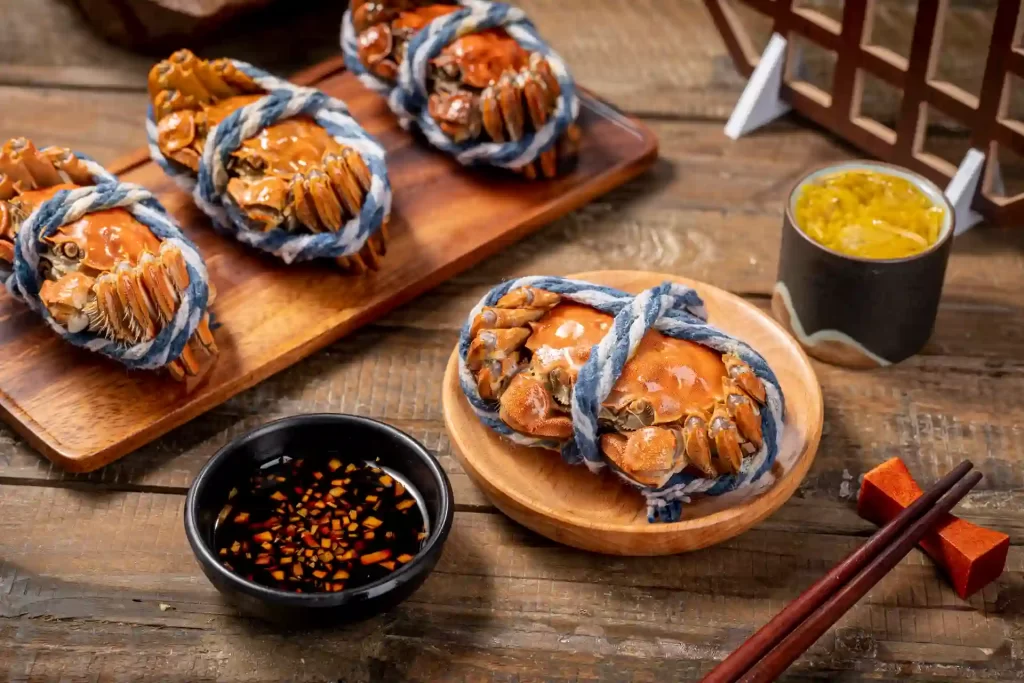
Crabs have rich, creamy roe and sweet, fresh meat, like a concentrated ultimate umami, a seasonal delicacy of autumn. The word for crab, “蟹” (xiè), sounds like “谢” (xiè – thanks). Eating crab expresses gratitude to nature and friends/relatives. It represents people’s heartfelt gratitude for a prosperous life and nature’s bounty.
6. Pumpkin – Joy of Harvest
Pumpkin has a powdery, soft, sweet taste, can be boiled or steamed, and carries a natural molasses aroma. It emphasizes the joy of the autumn harvest and the abundance and stability of family life. Its golden-yellow color symbolizes a “house full of gold and jade” , implying wealth and harvest. It is especially an auspicious dish for Mid-Autumn family feasts in the Jiangnan region.
7. River Snails – Making Dreams Come True
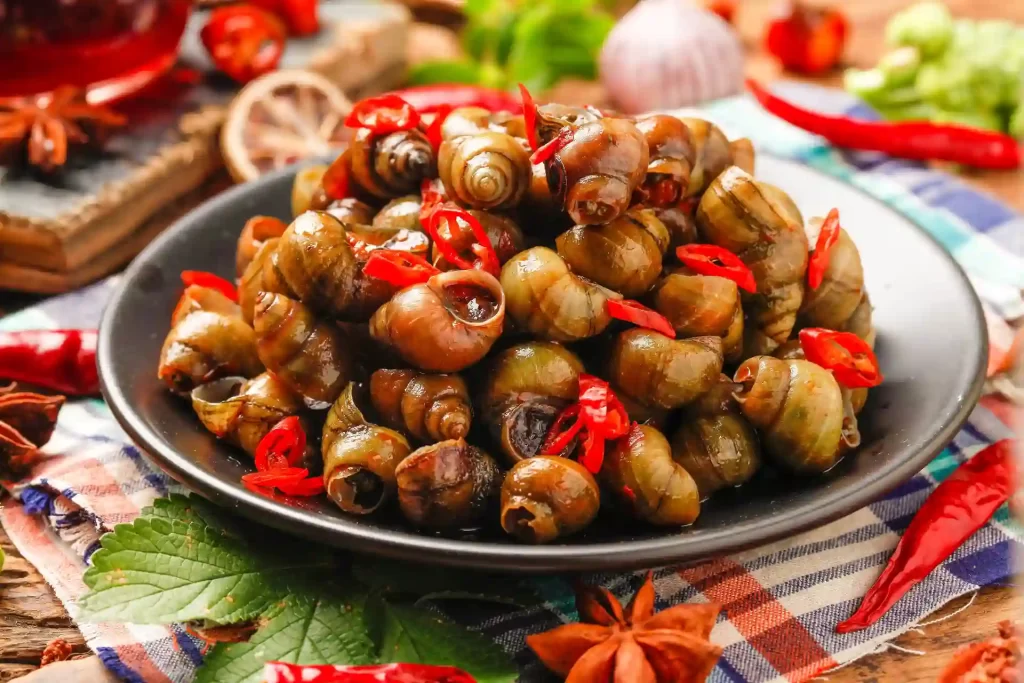
Often stir-fried with perilla, they are spicy, rich, and have a unique texture with firm, springy snail meat. They embody simple wishes for a clear future, wisdom, and success. Eating river snails implies “bright eyes and clear vision”, symbolizing seeing the path ahead clearly and having wishes fulfilled. This is particularly popular in Hunan, Guangdong, and Guangxi.
Customs & Celebrations in Other Country
The Mid-Autumn Festival is not only celebrated in China but is also popular in Vietnam, South Korea, Japan, Singapore, Malaysia, and other countries and regions influenced by Chinese culture. From the shimmering lanterns on Vietnamese streets to the quiet moon-viewing (Tsukimi) in Japanese gardens, from Korea’s solemn ancestral rituals to Singapore’s dazzling city light-ups, each country has endowed the Mid-Autumn Festival with its own unique cultural significance.
Vietnam’s Mid-Autumn Festival: A Lantern Feast Brimming with Childlike Joy
In Vietnam, children carrying colorful lanterns are a common sight on the streets. Children also participate in lion dances and lantern parades amidst the sounds of joyful gongs and drums. Vietnamese specialty mooncakes are often sweet, filled with mung bean paste, candied winter melon, and salted egg yolk, symbolizing the “radiance of both the sun and moon”. The festival in Vietnam is filled with an atmosphere of innocence and joy, embodying good wishes for the healthy growth of the next generation.
Japan’s Mid-Autumn Festival: The Quietly Elegant Moon-Viewing Banquet
The Japanese celebrate the mid-autumn moon under the more poetic name “Tsukimi” (Moon-Viewing), which has a stronger color of nature worship. People set up a (Tsukimidai – moon-viewing stand) at home, decorate it with susuki grass (pampas grass) symbolizing harvest, and offer round, white dango (rice dumplings) and taro. In some parks and temples, moon-viewing tea parties are held where participants sip tea and compose poetry under the moonlight. It contains the Japanese people’s deep gratitude and reverence for the gifts of nature.
Korea’s Mid-Autumn Festival: The Warm yet Solemn Thanksgiving Celebration
In Korea, Chuseok is the most important traditional holiday of the year. On the eve of the holiday, millions of Koreans journey home to spend the holiday with their families. In the morning, each household holds a solemn Charye ceremony, placing newly harvested rice, fruits, and traditional songpyeon (rice cakes) before the ancestral tablets. The whole family sits together to share food and tell family stories, filled with gratitude to ancestors and cherishing family bonds.
Singapore’s Mid-Autumn Festival: A Feast of Light Blending Modern and Traditional
Singapore’s Mid-Autumn celebrations showcase the characteristics of multicultural integration. The Chinatown district transforms into a sea of lights, with giant lantern installations depicting traditional stories like Chang’e flying to the moon, while incorporating modern lighting art. At street fairs, besides traditional Cantonese mooncakes, innovative flavors like durian and snowskin mooncakes are dazzlingly abundant. People from all ethnic groups participate together in lantern-carrying activities and watch cultural performances. In this city-state, the Mid-Autumn Festival has become a cross-cultural celebration for all.
Malaysia’s Mid-Autumn Festival: A Warm Celebration of Interwoven Multiculturalism
The Malaysian Chinese have preserved Mid-Autumn traditions well while incorporating local characteristics. At nightfall, children carry various lanterns through the streets, and communities host lively carnivals and cultural performances. The most distinctive feature is Malaysia’s innovative mooncakes, with Musang King durian mooncakes becoming a new favorite due to their rich flavor. In this multicultural country, the Mid-Autumn Festival is not only a traditional Chinese festival but also a cultural feast where all ethnic groups participate and share joy.
Poetry About the Mid-Autumn Festival
A mid-autumn moon, a millennium thick with poetic sentiment. The Mid-Autumn Festival has been a source of inspiration for Chinese literati to express their emotions. Those verses passed down through the ages condense the bright moonlight, enduring longing, and profound philosophy into eternal words. Here are some of China’s most classic and widely circulated Mid-Autumn poetry lines (with attributed poets where commonly known).
- “We wish each other a long life so as to share the beauty of this graceful moonlight, even though miles apart.” (但愿人长久,千里共婵娟。)
- “Over the sea grows the moon bright; We gaze at it far, far apart.” (海上生明月,天涯共此时。)
- “Raising my head, I look at the bright moon; Lowering my head, I think of my hometown.” (举头望明月,低头思故乡。)
- “The dew is white tonight; While the moon brightens my homeland.” (露从今夜白,月是故乡明。)
- “Tonight, all gaze at the bright moon; Who knows where the autumn thoughts fall?” (今夜月明人尽望,不知秋思落谁家。)
- “If we could always have nights as perfectly round as this, human emotions wouldn’t necessarily be so different.” (若得长圆如此夜,人情未必看承别。)
- “Feelings across ten thousand li share this brightness; On this day of the year, it is most clear.” (万里此情同皎洁,一年今日最分明。)
- “Until the very end of the sky, it has never privately shone on a single household.” (直到天头天尽处,不曾私照一人家。)
Frequently Asked Questions and Interesting Facts About the Mid-Autumn Festival
1. What is the Mid-Autumn Festival?
The Mid-Autumn Festival is one of China’s most important traditional holidays. It’s a celebration of the harvest, family reunion, and appreciating the year’s fullest moon. Think of it as a “Thanksgiving and family reunion day under the moon”!
2. When is the Mid-Autumn Festival?
The date of the Mid-Autumn Festival changes every year because it follows the lunar calendar. It always falls on the 15th day of the 8th lunar month, when the moon is fullest and brightest. In 2025, the Mid-Autumn Festival is on October 6th.
3. What is the Moon Festival? Is it the same as the Mid-Autumn Festival?
A: Yes, they are the same thing. “Mid-Autumn Festival” is the direct translation, while “Moon Festival” is a common English name reflecting the moon’s key role in the celebrations.
4. Why do people eat mooncakes during the Mid-Autumn Festival?
A: Mooncakes are round, symbolizing reunion and completeness. In ancient times, they were also used as offerings to the Moon Goddess. Over time, they became an essential delicious treat for the festival.
5. Is admiring the moon mandatory for the Mid-Autumn Festival?
A: It is a core custom, but if the weather is bad, family reunion and having dinner together are equally important ways to celebrate.
6. Do the Mid-Autumn Festival and National Day sometimes coincide?
A: Due to differences between the lunar and solar calendars, the Mid-Autumn Festival sometimes falls near or even overlaps with the National Day holiday (Oct 1st), creating a “Double Festival” long holiday. For example, in 2025, the Mid-Autumn Festival is on October 6th, which is during the National Day holiday period (Oct 1st – Oct 7th).
7. Is the Mid-Autumn Festival a public holiday?
A: In China, the Mid-Autumn Festival is a public holiday. It typically results in a 3-day break (including the weekend). In 2025, the Mid-Autumn holiday overlaps with the National Day holiday, creating an 8-day public holiday.
8. How is the Mid-Autumn Festival celebrated?
A: Key activities include the family reunion dinner, eating mooncakes, admiring the moon, drinking osmanthus wine, carrying lanterns, and moon worship.
9. How can foreigners experience the Mid-Autumn Festival?
A: They can attend Mid-Autumn parties hosted by local Chinese communities, taste mooncakes, carry lanterns, admire the moon, or even try making mooncakes themselves for a hands-on cultural experience.